Remember me, I used to be a rebel, soar the azure skies, and climb the high tides I have crossed the seven seas, and the thirteen rivers.
Remember me, I used to live for new smells, tread on fresh soils. and play the fancy electrophones I have searched the world, and scourged myself.
Now I live for the old spices, and the graying dog. the boundaries have dissolved, and I am ready for communion.
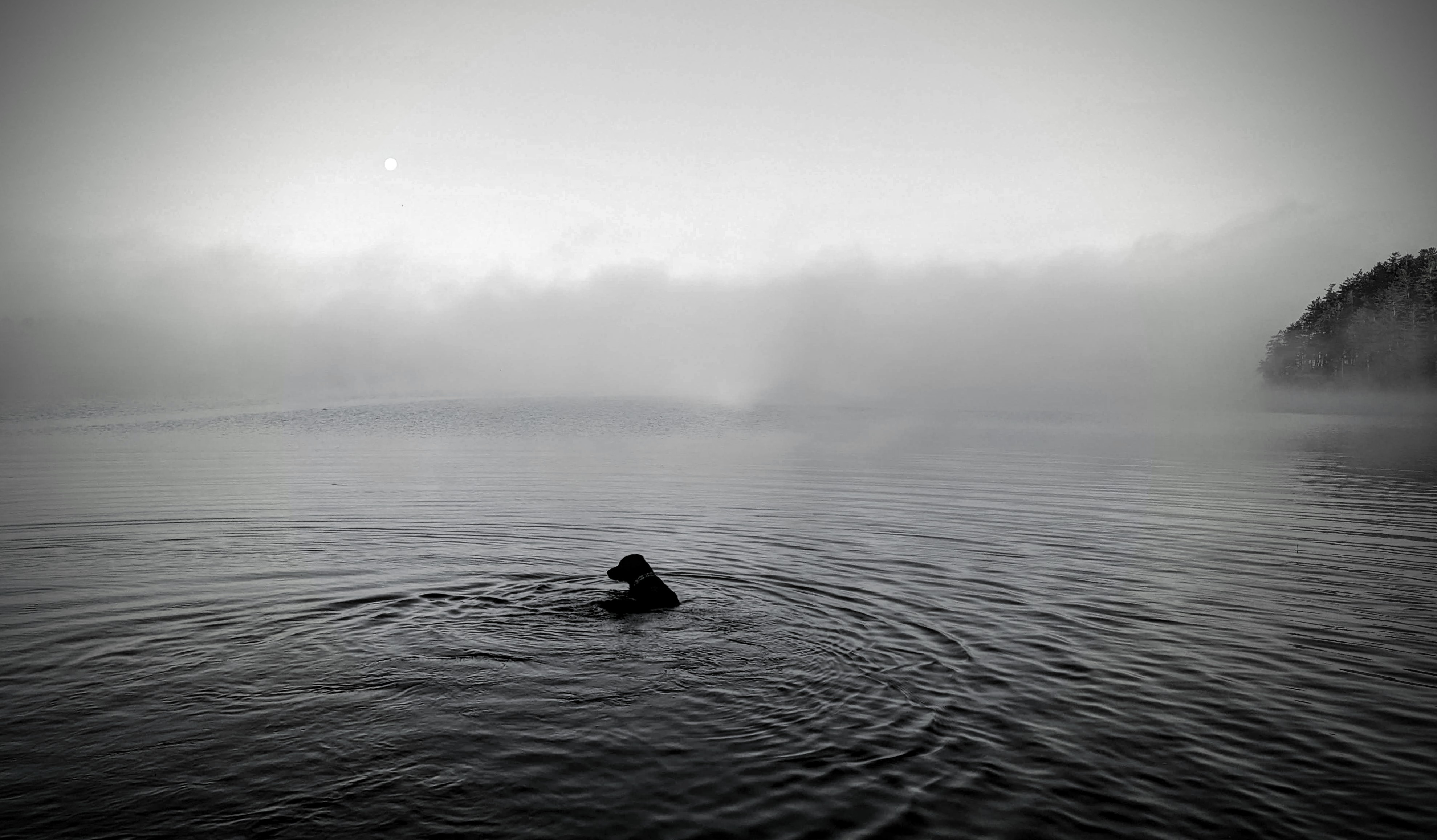
I throw the stick into the water. Moose, the dog, bolts past, making ripples. I like to call them Moose ripples.
He brings it back. I throw it again. He brings it back. I throw it yet again.
He does not tire.
All I can do is try- keep up with him.
The eternal game continues- each time with a different Moose ripple in the space-time continuum.
They say insanity is doing the same thing over and over expecting different results. That is true of expectations. Not of repetition.
The eternal game continues- every time a different Moose ripple.
I do not know why.
All I can leave you with is this – I do not need to know why to understand it. I do not need to understand to feel it. Above all, it does not need to mean anything to feel it.
Far too often, meaningful work, or the illusion of it, gets in the way of living.
I have barely started to live.
“Let the beauty we love be what we do. There are hundreds of ways to kneel and kiss the ground.” – Rumi
All I need to do is show up by the lake with a good stick.
I shall make the right image. I shall invent the most useless words that you will understand. And they will mean nothing.
To be a Flower, is profound Responsibility1 – if that is true, then November is a land without law. I do not know if I am seeking November, or if I would like it. But since it is here, all I can do is place myself in its path. Maybe seeking is, after all, about something not sought after.
They say that the winter snow is like a blanket of kindness that drapes the barren landscape. November, with odd snow days, does not try to even out its edges. Like a holly leaf near the bottom of the plants developing spikes, November dissuades grazers. The tourists dissipate; the locals hibernate until the snow is good enough for skiing. At this time, when nothing happens, where the land neither cares, nor cures, maybe it is easier to insert myself.
I remember the time my father lost a tire in a marsh, and went back the next morning to find it: an ordinary day in an ordinary country- of little liberty and ample beauty. Here I am now, in another ordinary country, on another ordinary November day, losing myself in a marsh- and finding it, next morning. I see the last dodo that refused to see fear in a handful of dust2. I see Thomas Roe lowering his anchor in Surat. I see the dwindling lights of Samarkand, the burning ghats of Banaras. I see the retreat of the tundra, and the victory of the algae.
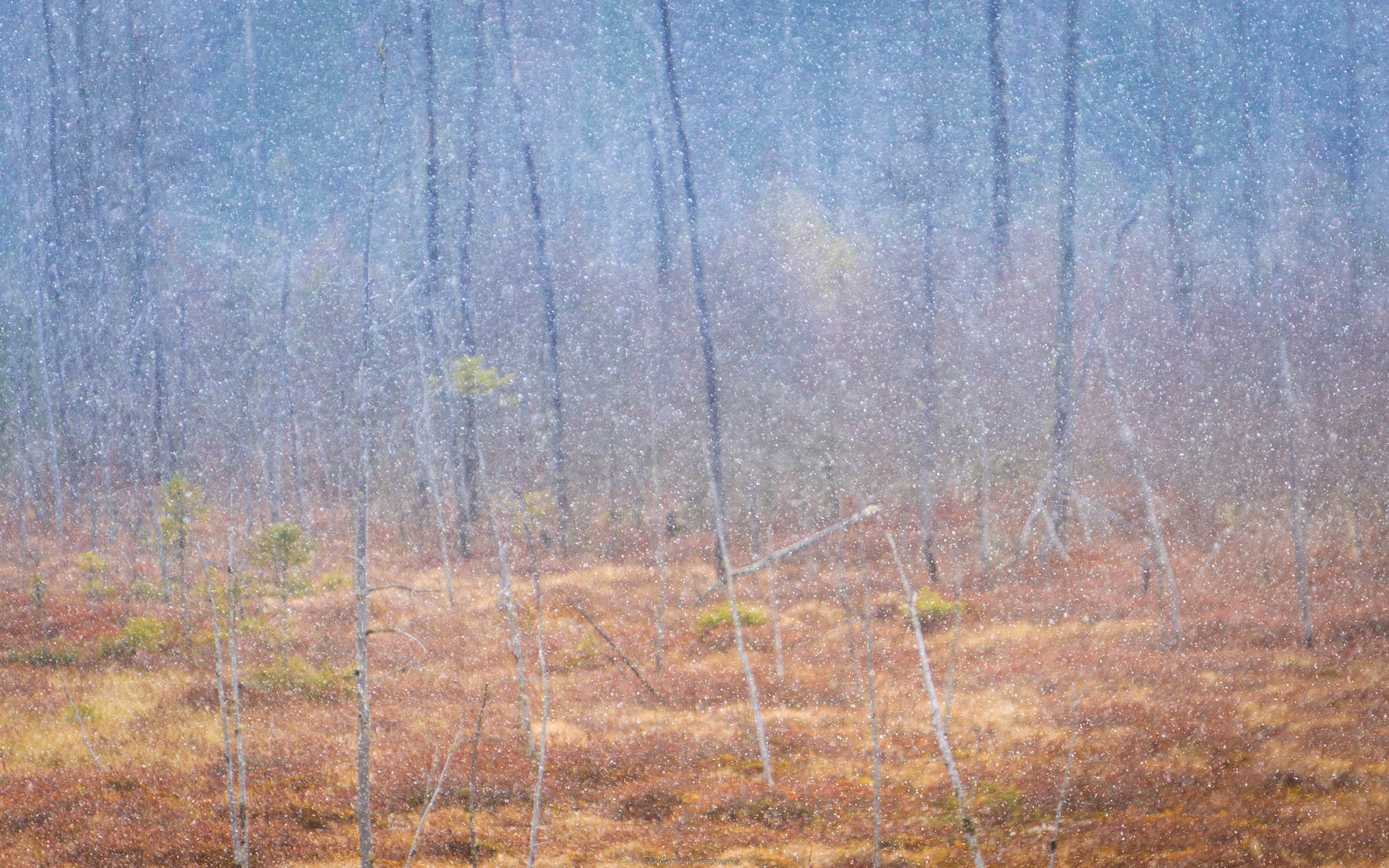
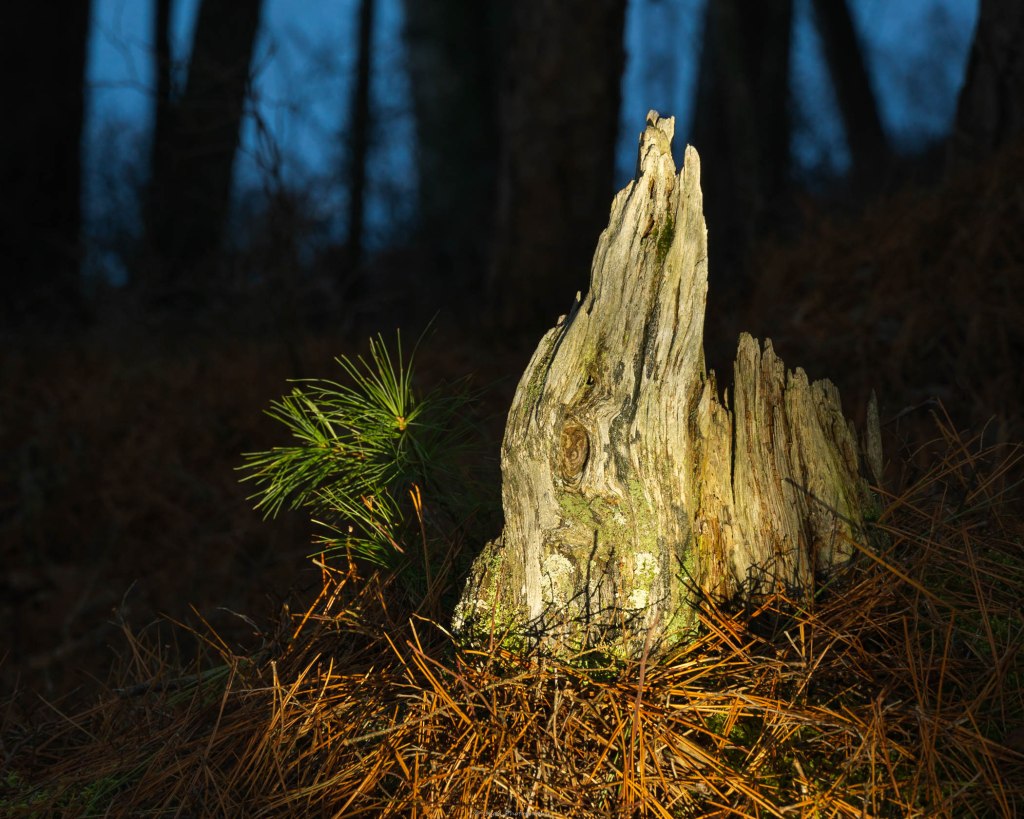
As a light snow falls on this November night- I think of the little rights remaining, and the ample beauty still left: where continuity stands in the way of liberation, it is inevitable that a pine sapling takes foothold in the murky memory of spruce and leatherleaf and tamaracks and rose pogonias.
If all is stardust, why should one be better than another?
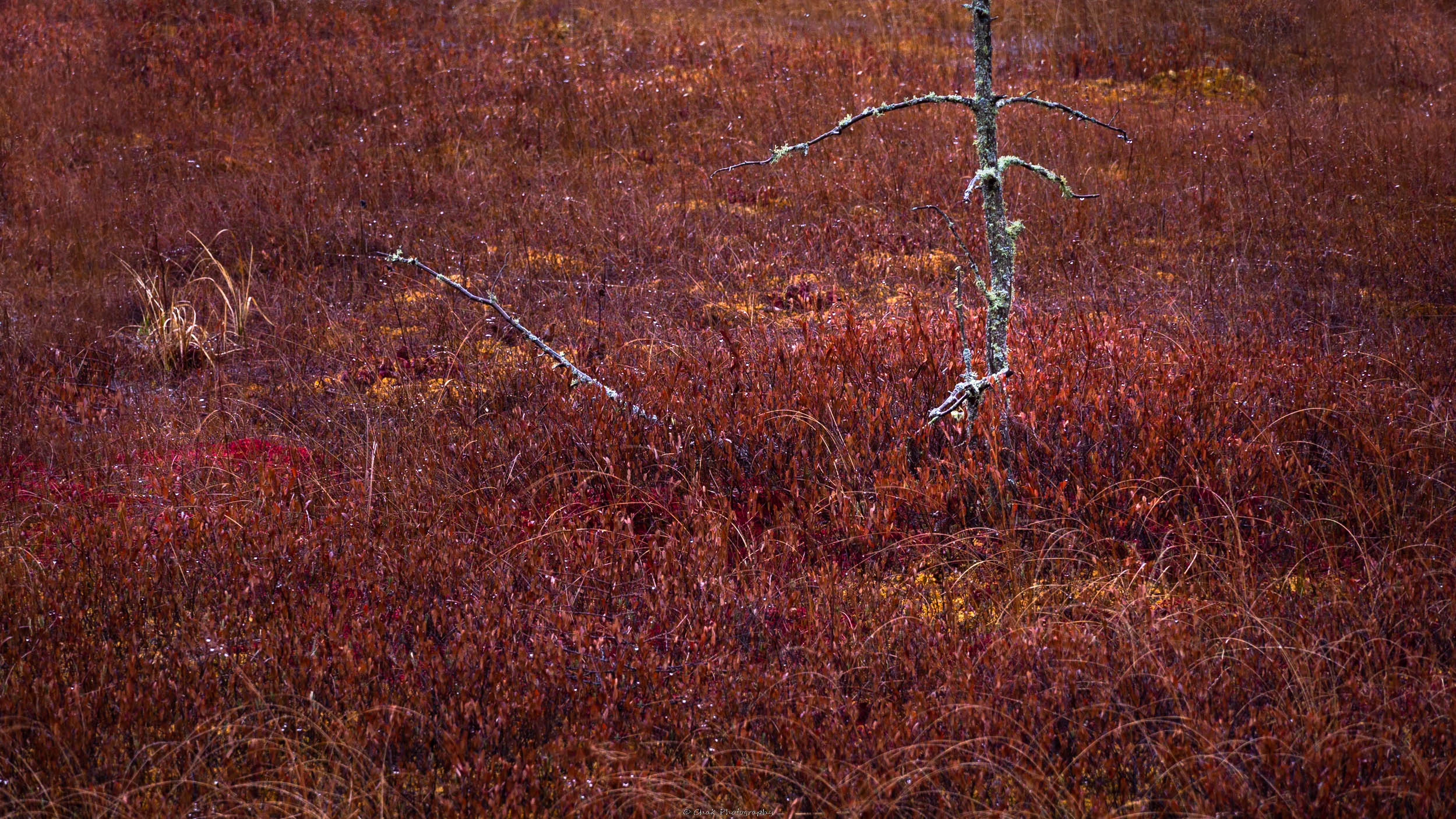
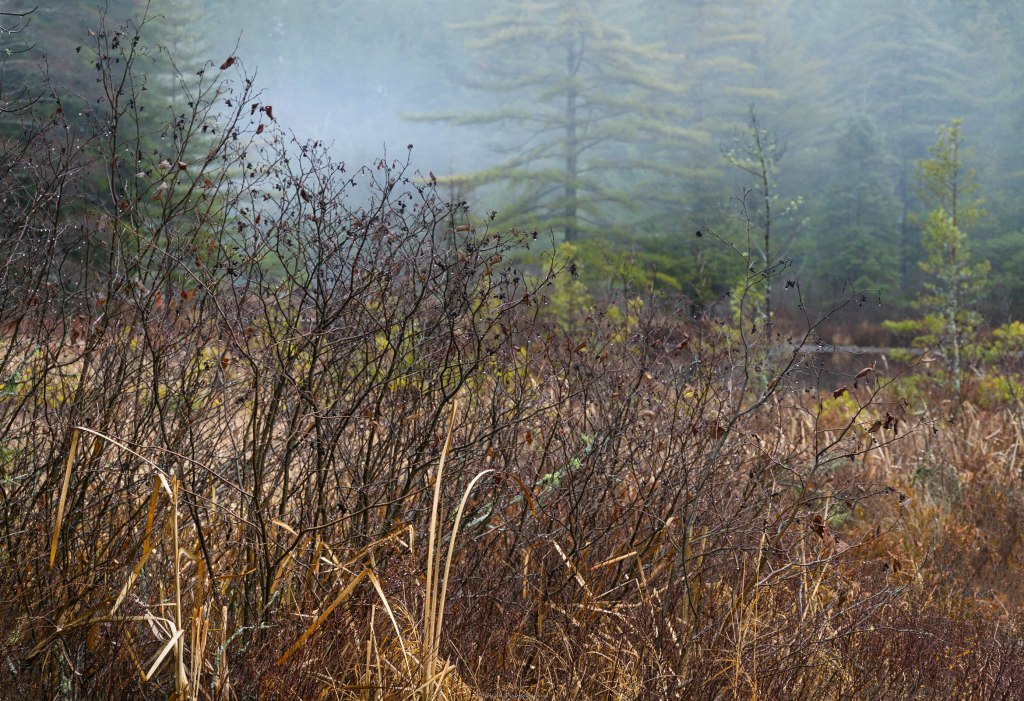
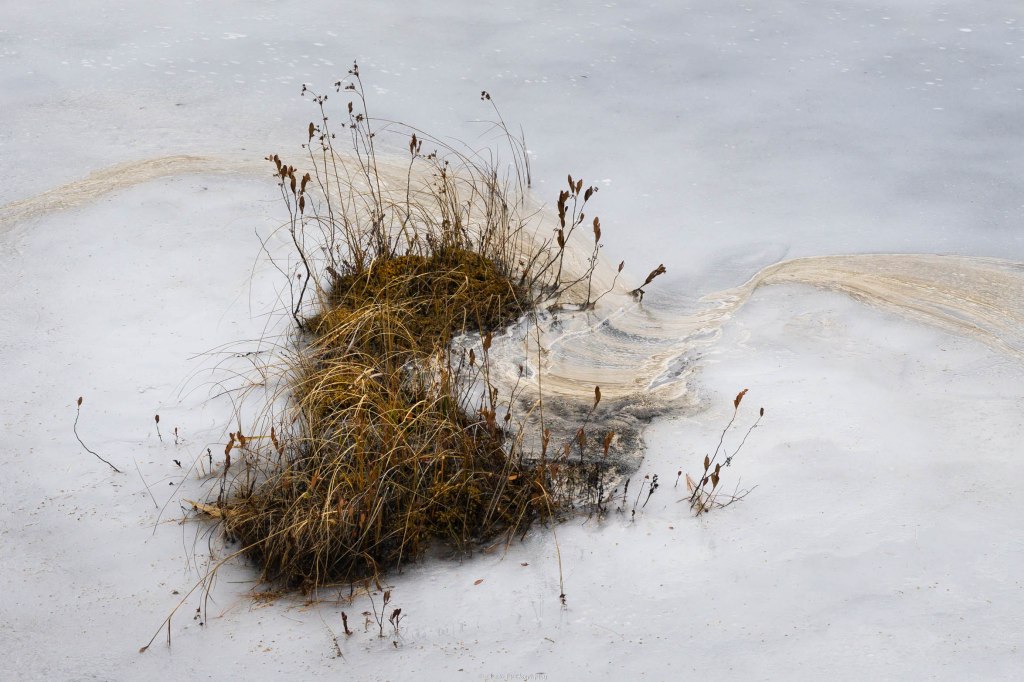
It is in this great leveller of seasons – with no flowers to sanctify, no black flies to vilify; in the browning heath, and a slightly frosted sedge, the indecisive hardening of sphagnum, anxious footprints of a coyote in the sudden thaw-lines in a slowly freezing lake, the tanning of the grass by the water’s edge, the bare aspens, the barely clinging beech leaves, the grey November light, unimpeded by greenery, walking deeper into the blood- clotted landscape- that rights and kinship, sans ownership, sans privilege, is facilitated.
In this light, at this time of the year, I can read the landscape better. And contribute a verse3.
I wait for one infinity in the cold and bleak. -with my black dog4
It is amazing how easy that is to do. The leaves go first. and then the shade and then the loons and then the sunshine finally, it is November.
Telling it like it is- without the rage of monsoon, or the softness of autumn. without the- summer fruit, or the spring flowers; when the snow is not yet deep, and there are no promises to keep. November slips in as if nothing ever happened.
I have been to the brothel of Autumn and bartered beauty in maples I saw your world, and held your light- until I plucked warm stars out of the moonless November sky and pinned them to the tamaracks I see you now. I see you now. I walk in your shadow.
Here is the secret of the seasons- where the river has died and the black dog and I need to hide there is not enough light. there is not enough night. -for all that is brown and living, November offers nothing.
The first lover, and the last empire had their share- now it is time, for the brown lilypad to summon you. into this unholy peatland. all night long, this November light carries the Brown’s burden The peaceful poems of the savage5
there is beauty in the aftermath of the war, where the worst is over, and the best is best– kept at bay. there, you can hold- the empty purpose, just you and the world- ending the world.
and then I wait for one more infinity -with my black dog4
There are hundreds of ways to kneel and kiss the ground.” – Rumi
Oftentimes the aesthetics of a foggy morning, or a tree draped in colourful foliage, or the both together, is so blinding that I have no choice but to accept defeat and take an image. I would never give up on those mornings. But I am learning to not have an instrument on me at all those times.
Other times, nostalgia takes over. Of a land where I was born but never knew too well to another land that I am learning, and learning it well enough to be buried in it. The home of now calls out to the past, and dwelling in what could have been takes ever so much away from present work.
Then there is anthropomorphization, especially when it has no business of being there. The mountain and the lake were here before any humans, and certainly before I stood here. And yet I cannot help but see through the spectacles of my own species. And so much gets lost in translation.
Sometimes, I like to highlight issues such as climate change, or advocate a new parcel of public land as wilderness through my work. And every time I wonder about the passionate conviction, and academic ego masquerading as wisdom.
All this, I presume I do, in the hopes of finding some meaning in my creations. And by extension making my life meaningful.
But far too often- creating, or the illusion of it, gets in the way of living. And I have barely started to live.
One day I shall not carry the mountain on my shoulders. It will be in my heart.
One day I shall not cross the bridge when it comes to it. I will be standing in the water.
On that day, I shall make the right image. That day I shall find the right words.
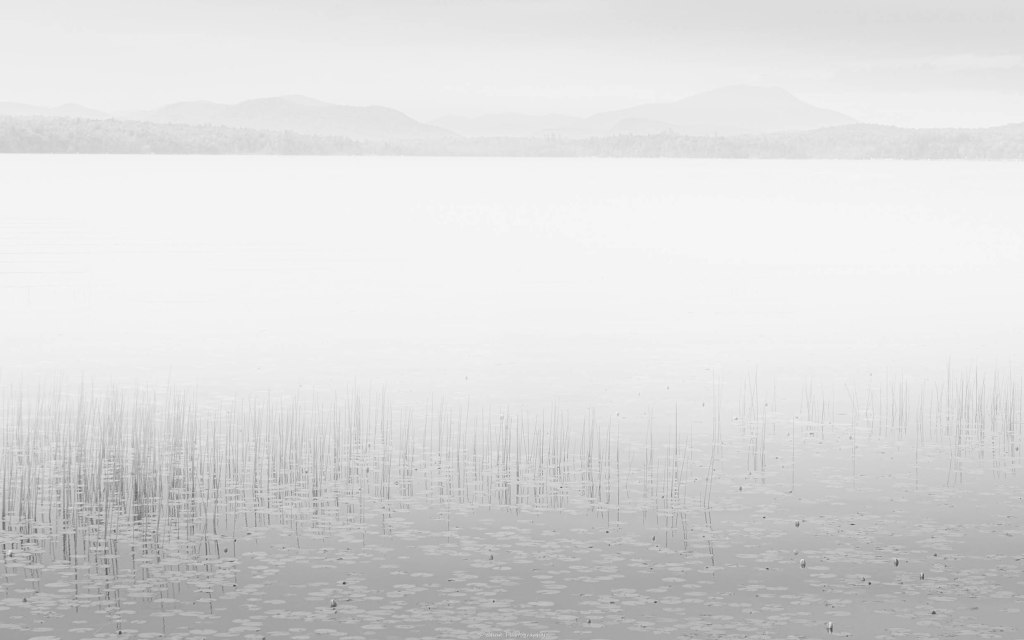
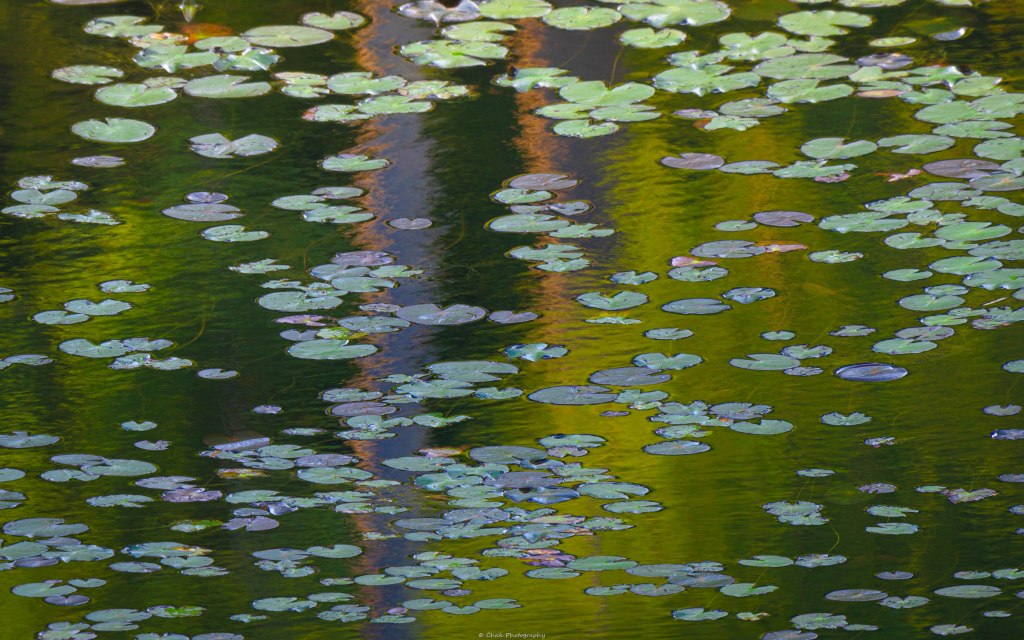
My morning started in a tangled web of light and lilypads, grass and pines, one that is weaved in a deceitful way, but also without any intent to deceive. It is easy to skip them and ride on to the “‘better views” or the “High Peaks”. Aldo Leopold noted in A Sand County Almanac- “Like ions shot from the sun, the week-enders radiate from every town, generating heat and friction as they go.”. Though not a peak bagger, I used to be one of those weekenders. But now I have time on my side. And I hope the tide is too.
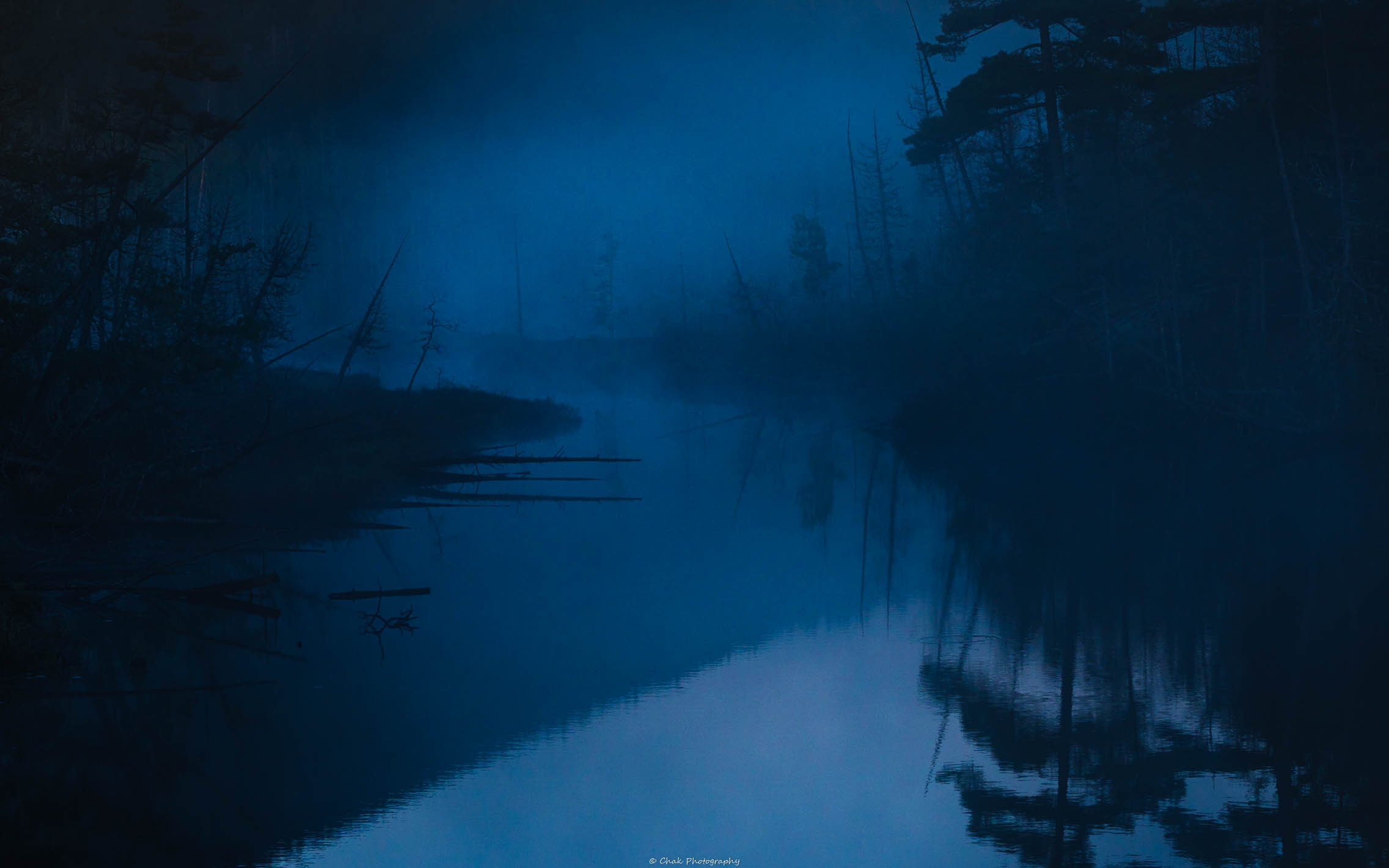
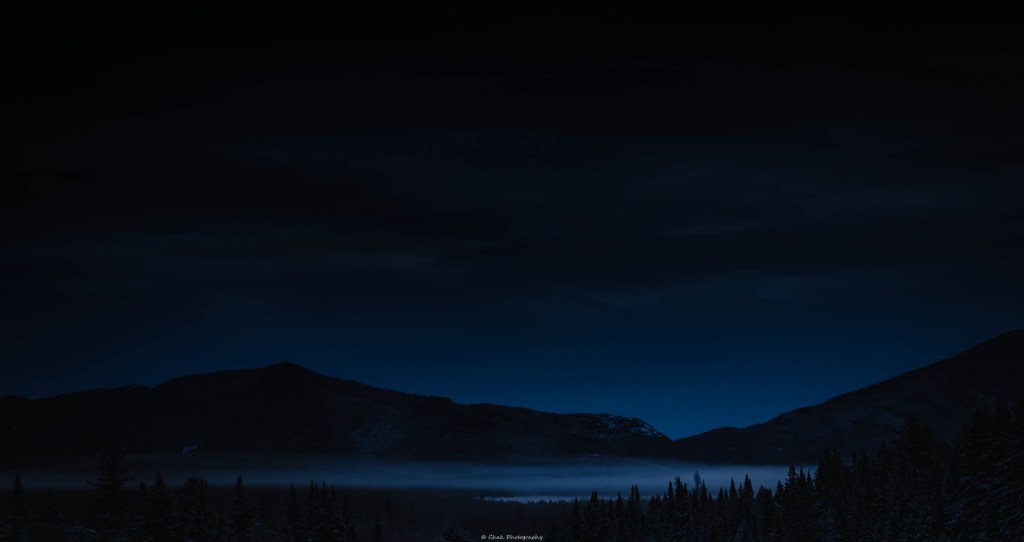
It is pre-dawn in the bog, as if someone has scattered labradorite dust in the air, a spectacle that would rapidly disappear with the rising sun, a blue abscondee that vows to blanket the marsh again in another turn of the celestial rock. There is hardly a chance of anyone showing up here anytime soon, and so I let Moose, the dog, run off leash. It was a mistake! Moose sensed the presence of the geese before I heard their honk, and disappeared in the swamp. After a few minutes of frantic calling, he returned with a dejected look, covered in mud and sticks, while the geese soared in the first light of the day.
I decide to walk around the bog with Moose, now on a leash, and watch the early profusion of lilypads. Spring was on steroids, catalyzed by the intense heat over the past few days. It is supposed to rain later in the day. I have plans to hike a nearby mountain but I need to decide on bringing Moose. He is anxious about thunderstorms and I am anxious about losing him if he breaks the leash and runs away.
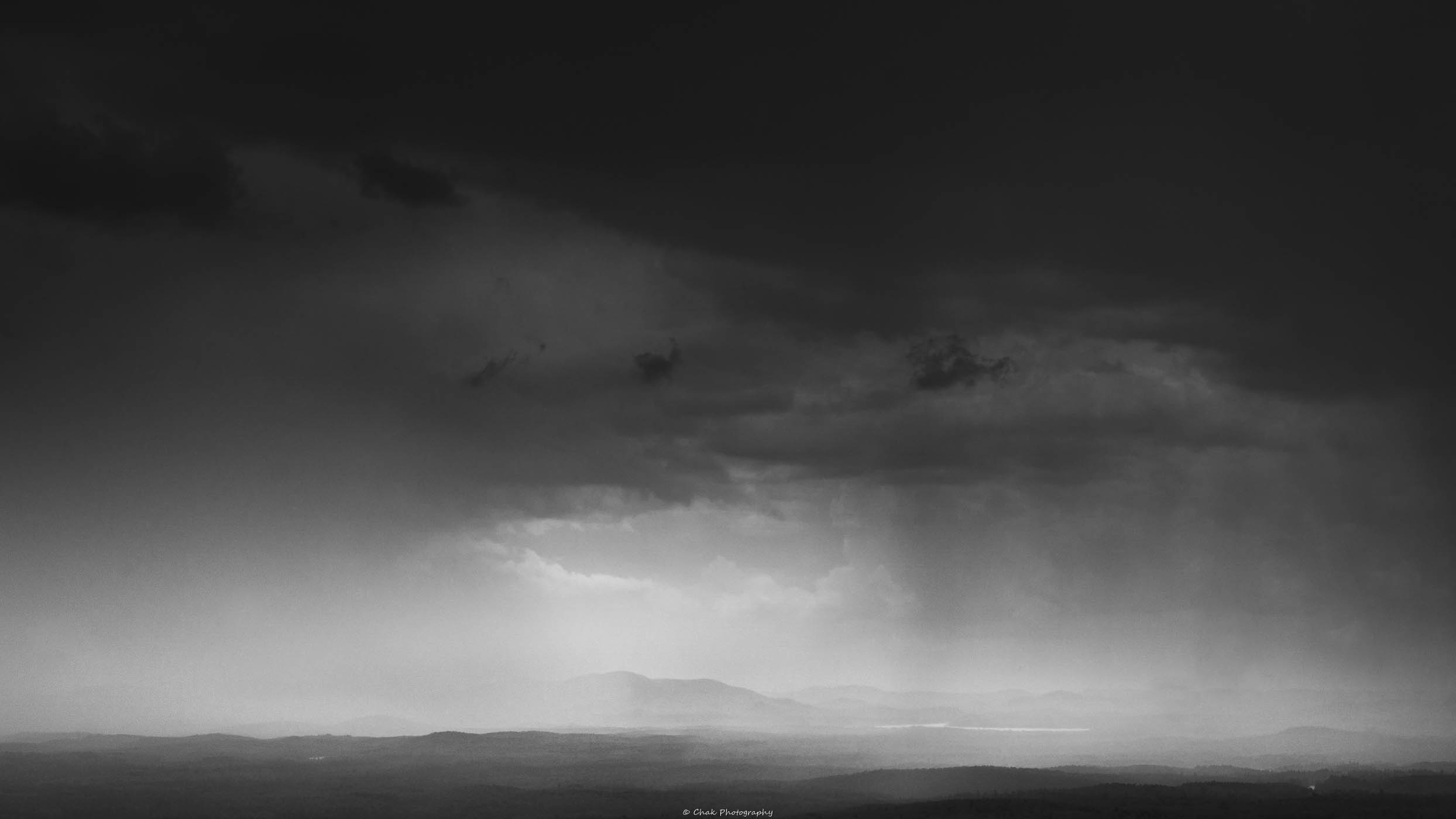
It is later in the day. We are hiking the mountain. We both decided to face our respective anxieties today. I can neither confirm nor deny whether the puppy eyes of abandonment while I was leaving for the hike was a factor in the decision. Fortunately, there are no signs of thunderstorms yet. Moose is happily running along the trail and playing with sticks. Soon, we reached the summit just as the clouds burst in the horizon.
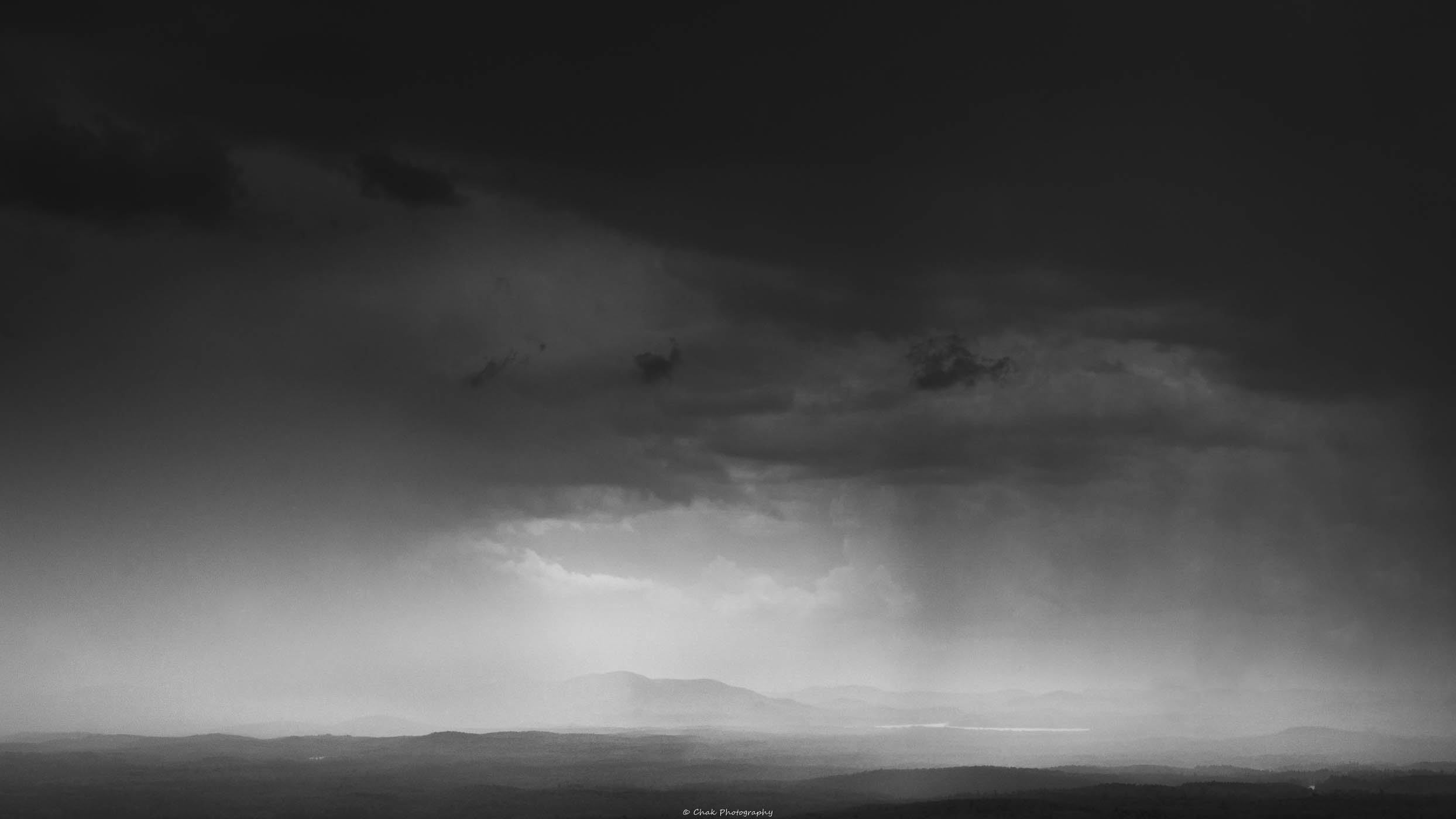
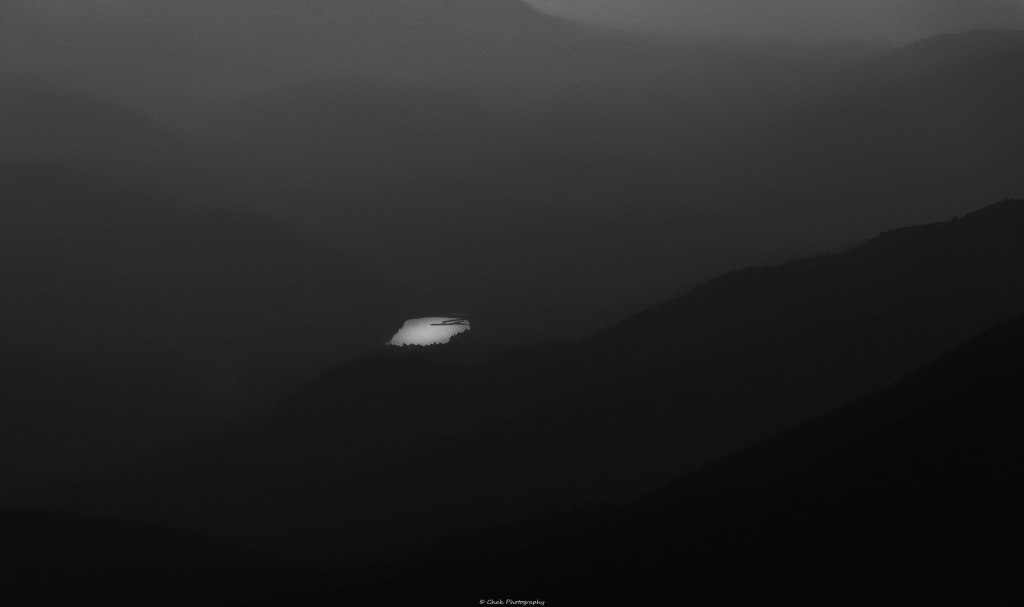
Mountains and ravines stretching as far as the eyes can gleam, a downpour here, a piercing shaft of light there; how does a thunderstorm decide which range gets the growl, and who deserves the lightning, and who can bask in the fresh rain: what is the right word for a mix of petrichor and petrifying, and if there is one, I would wish upon each drop of the rain that it is not a noun, nor an adjective, but a verb, for I would want to actively partake in it.
This is a place to breathe, in the storm, and the calm, in the rain, and the sun; I have been to many breathtaking places but here, on this Adirondack mountain, I have come not to have my breath taken away, but to be able to breathe- slowly and freely.
And Moose thinks the same too- he did not run away. After he finished cooling off on a small puddle at the summit, he has been very busy with a stick of maple that he carried from the forest below. He did look up and around every time there was thunder. But there were more pressing matters- the maple stick will not chew itself.
These mountains, this dog, that distant rain, those lilies in the valley- they are my story. I photograph them, I write them for myself. I do not create in the hopes of a legacy or a revenue stream, though I would welcome both if they come my way. Too many years have passed in finding it. Mary Oliver wrote- “I ask you again: if you have not been enchanted by this adventure – your life- what would do for you?”. I am prepared to be enchanted by this place for a lifetime. And I only hope that I am allowed to be so.
The storm has now reached this mountain. Our mountain. We decide to head down, through the forest lush in all shades of green- “…even Solomon in all his glory was not dressed like one of these.” (Matthew 6:25-34), while the rain keeps company.
This is an important question for me. And I am writing down the answer here primarily for myself.
I live in the Adirondacks because I can. Not everybody can.
Making a living here needs a certain amount of grit, and a great deal of privilege. Many, if not all, focus only on the former, while downplaying the latter.
Weather is harsh for most of the year, employment opportunities are scarce and niche, and there is not much in the way of recreation unless you love being outdoors.
As for privilege, both racial and generational, plays a huge role. While this essay is not the place to expand on the topic, one easy marker of that privilege is the denial by the very ones who benefit from it.
I have found that most people want to live in their comfort zones forever. The best they do is make their comfort zone bigger, maybe prevent it from becoming a bubble, but very few actually want to break free. That is why most Indians (I am speaking only about my nationality by birth) find their own communities, in metropolises and/or university-centric towns. With the familiar comfort of good food and communication in mother tongue, comes the gossip, racial bias and moral superiority, and traditional measures of financial success.
I think that Indian food is the best in the world. I am proud that Bangla is my native language. I enjoy the occasional gossip. Dare I say that I do feel foolishly morally superior about certain positions in my life. And yes, I also have some intrinsic racial bias. I constantly work on the last two aspects to better myself. Although, in exchange, I must say that Indian food is the absolute best. No arguments there!
I am privileged to have been born an upper-caste in India. And even though life was not without financial struggles, I received a good education that catapulted a journey of nine thousand miles.
But that is not all.
I live in the Adirondacks because I read. I live here because I read Chander Pahar*. And then all that Bibhutibhushan Bandopadhyay* wrote. He could see farther than all: even without travelling to foreign lands, during an era before the internet. But I am a mere mortal and I had to go witness a glimpse of the wild for myself.
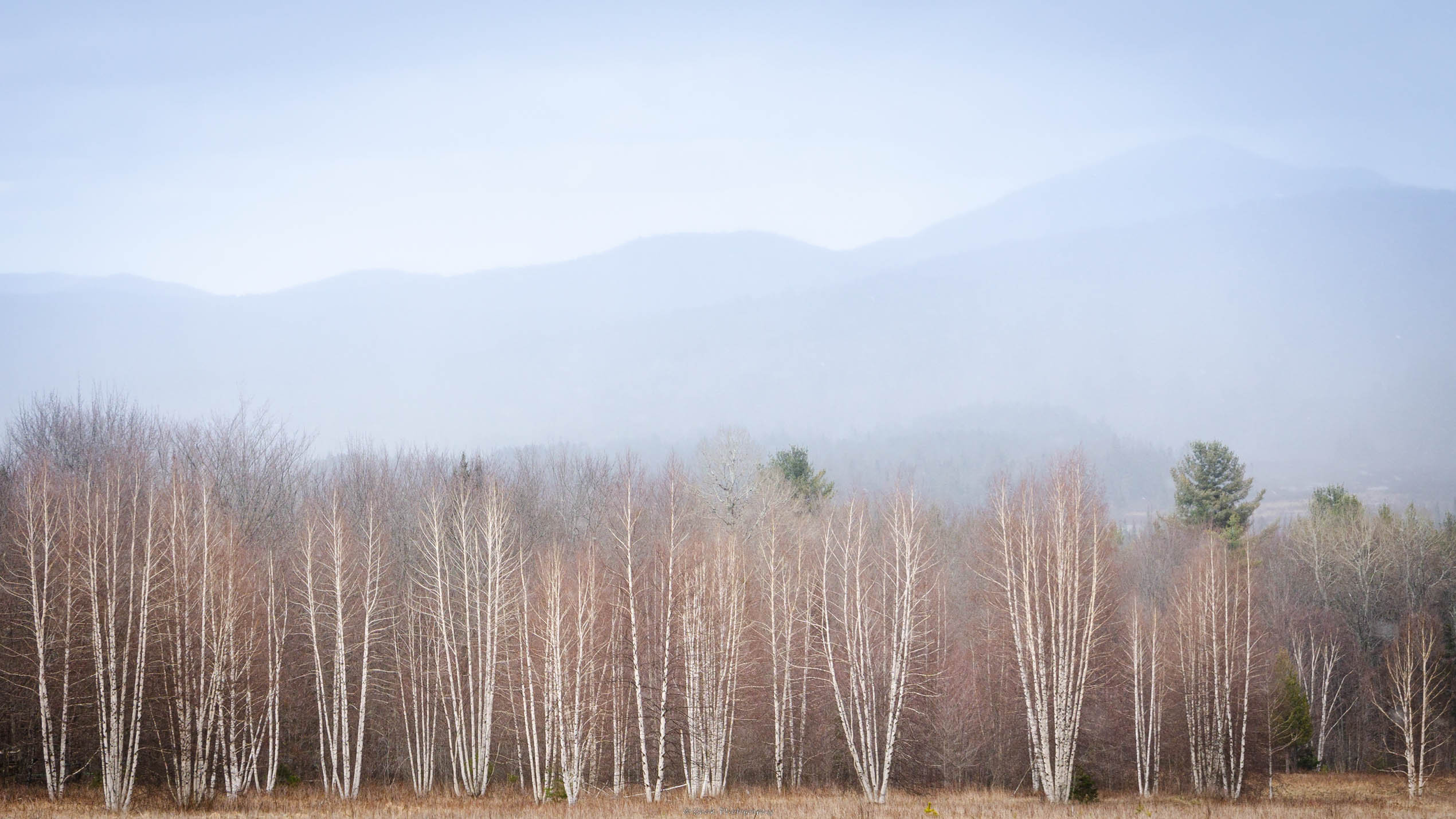
I live in the Adirondacks because I had to see a place where the mist plays truant with the landscape.
And soon seeing was not enough. I had to know how the light touches the mountain.
I had to live in the mountains. I had to touch the light.
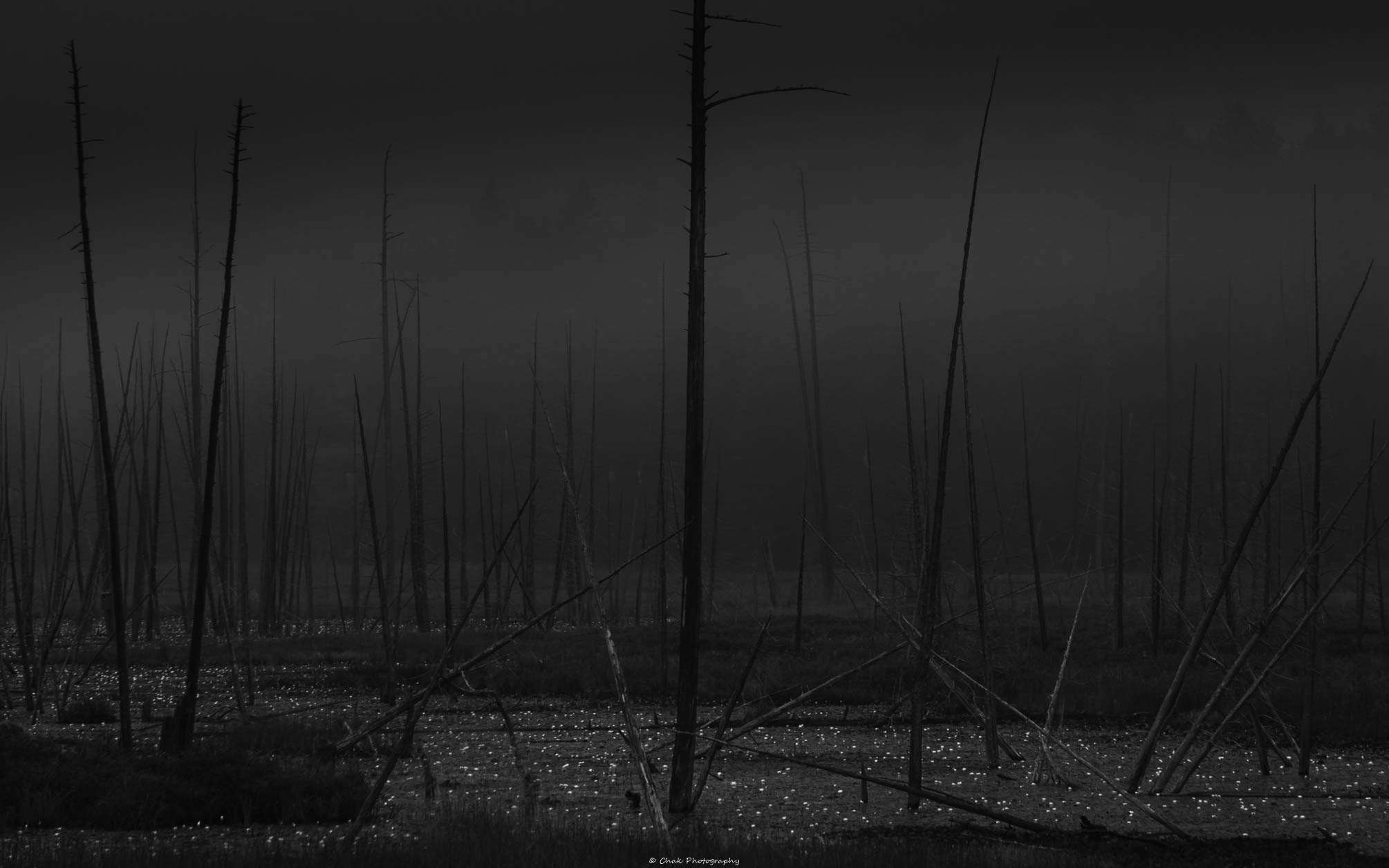
I live in the Adirondacks because a foggy morning and a dead pine is more important to me than a festive gathering and lifeless conversations.
I live in the Adirondacks because I love the mud and bog. I live here because I did not play in the dirt enough as a child.
I live in the Adirondacks because I seriously studied Chemistry for as long as I could. I knew Antoine Lavoisier decades before Adirondack Murray. I live here because I can barter reaction mechanisms for paddles under the full moon.
I live in the Adirondacks because I was given a film camera in my high school. I could not afford to spend on such ‘frivolous pursuits’ then. I can afford it now. But it is not necessary anymore.
I live in the Adirondacks because my teacher asked me to write. And I did not for many years. But it is necessary for me now that I write.
I live in the Adirondacks because I read the White Fang. And I wanted to experience a place through a dear animal. I live here because I did not grow up with a pet.
I live in the Adirondacks because how else would I have known that a beaver can chase you while you are studying a lilypad.
I still do not know why the chicken crossed the road. But now I know why the salamander crossed the road.
I live in the Adirondacks because here I have come closer to myself than ever before.
I live in the Adirondacks because all returns to dust.
I live in the Adirondacks because I want to live.
(on Earth Day of 2022, an inquiry into my shelter in one corner of the earth)
“Right now is good, and that’s all that matters.” – Guy Tal
This is the place- where a rebel finds peace, an outlaw becomes a poet. The mist rises, and the dust settles. Here, storms and sorrow, laughter and mountains mingle into one another. This is a place where you can watch the grass grow. And the valley is greener on your side. If you know of such a place, hold it dear. Bring your ears to the ground, listen to it whisper. You will change in a blink, and so will the place, in a few more. But for this moment in time, under this one sun, this place and you will command the language of the heavens.
The mist here is more mystical than mysterious, unsure of destination, but welcoming of the journey. Not all can be known but much can be understood. Not everything can survive but all can live. And while there is no promise of eternity, this place preserves the sweetness in death.
This place tells a story beyond words and images, historical data and climate records, provable facts and documented knowledge. Your feet can only cover so much ground. But the mind can wander where footsteps cannot reach, imagination can complete the experience when memory has reached its limits. Ancient texts and scriptures promise you peace and prosperity, the ancients of this place grant you struggle and imagination.
Here, snow and ice, melting grays and freezing yellows, write a ballad and an elegy in the same breath. Every pause is a preparation, every cause is a rebellion, all in the act of carrying out the most magically mundane things.
Here, the sun is wantonly indiscriminate, disseminating light like the wisdom of an ancient sage. The bejeweled maple is no more privileged than the lifeless pine. And where there is no privilege, therein lies my pilgrimage.
If you do take the time, this place can offer it in things that are magnificently insignificant. In long and hushed goodbyes, as if farewell and funeral overlapping into one another. An exuberant hibernation, a jumbled mess of marcescence and photosynthesis.
The soft lilies, the tender birches, the quiet lakes, are all intimations of intimacy, of immortality. Here a speck of green, there a touch of the blue, everywhere a glimmer of yellow- a child frolicking with a kaleidoscope, intimations of nothingness conspiring to be held by you. Yes, such a place needs to be held by you.
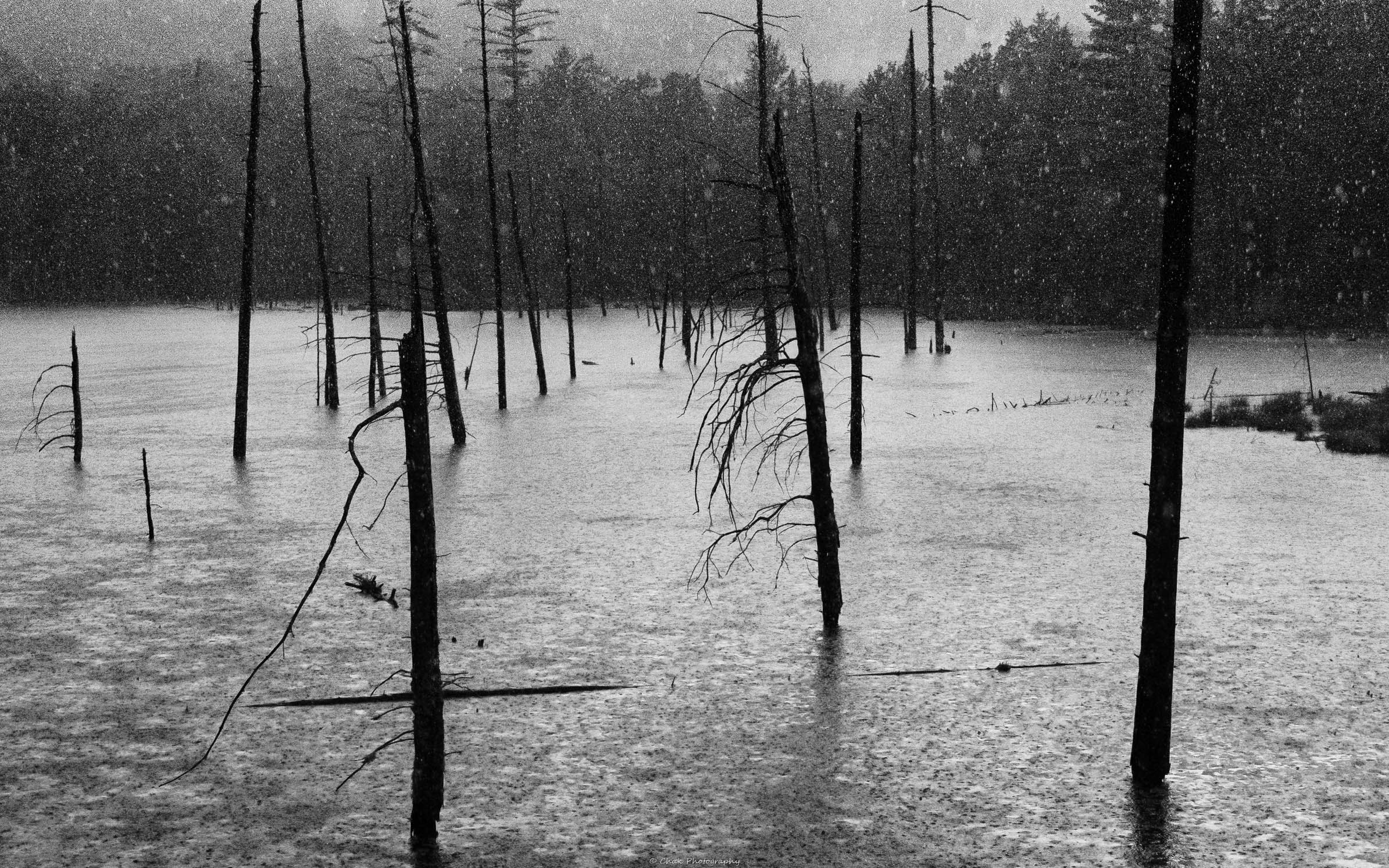
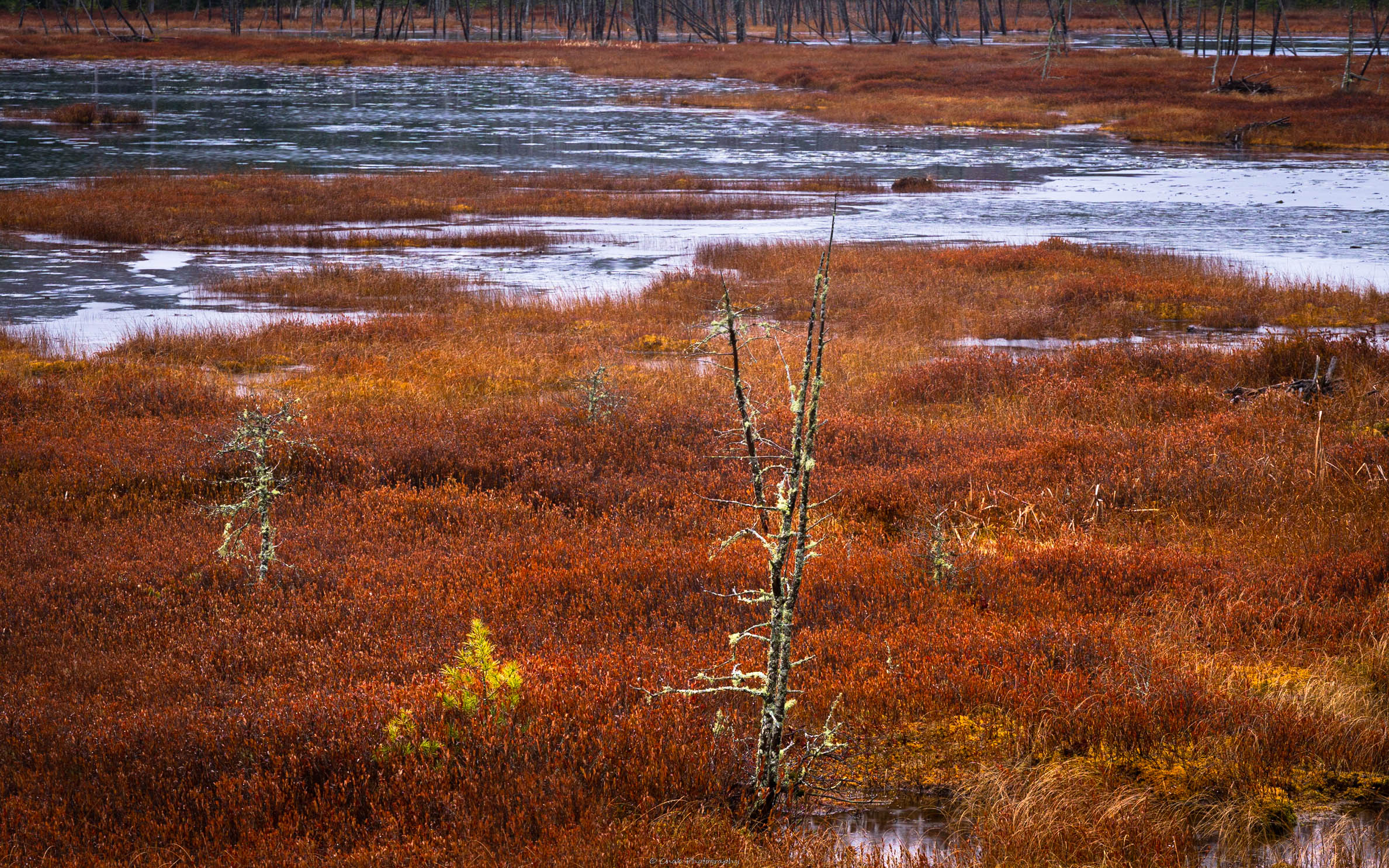
There you see tamaracks, standing amidst dead white pines, that have turned before their time, possibly due to change in water levels from beaver activity. They too will soon follow the way of the white pines, but not before one last hurrah! After all, “what is death but a long and vivid holiday”.
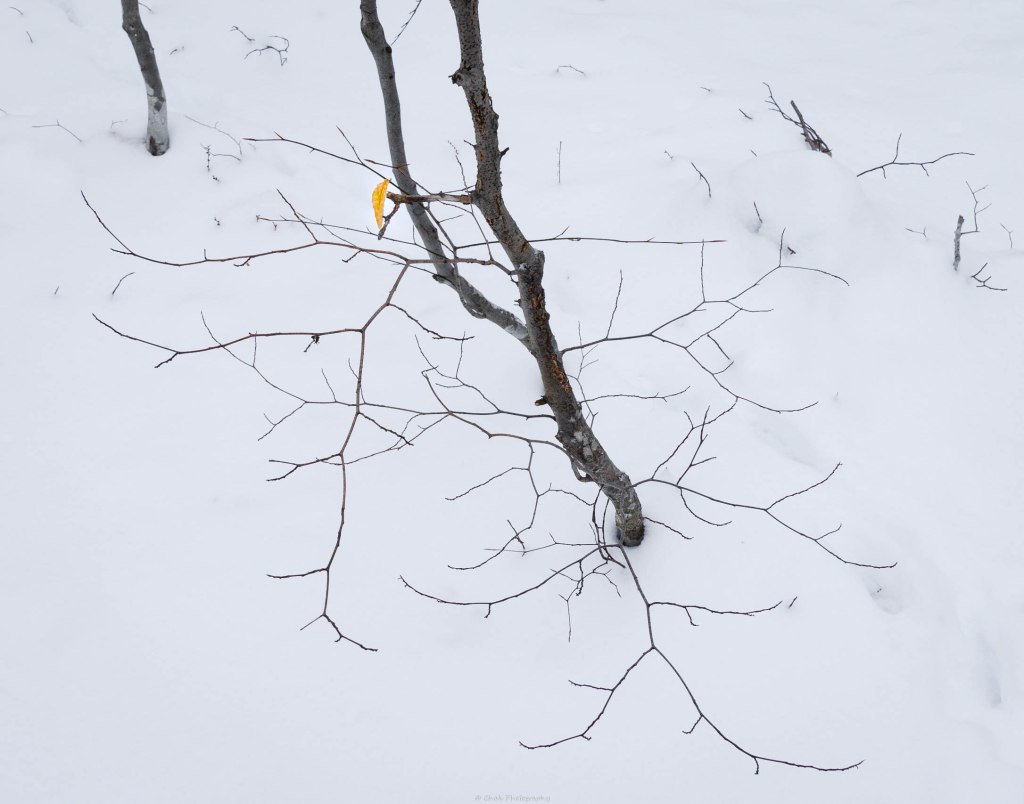
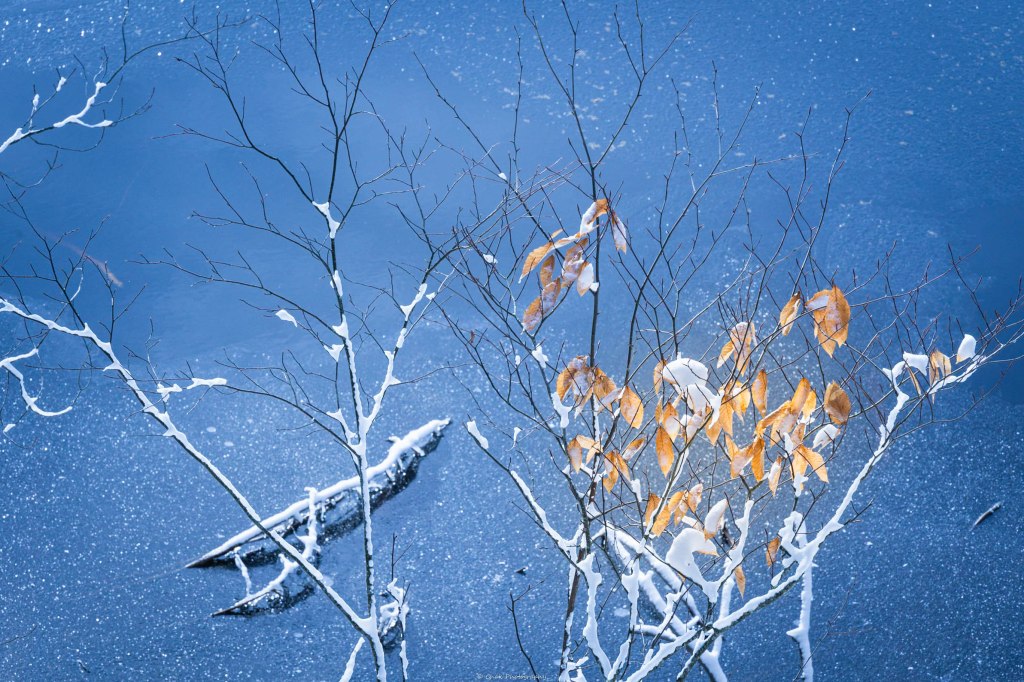
The more you know a place, the more unfamiliar it becomes by revealing its familiarity. And the more you explore, the more familiar it becomes by revealing its unfamiliarity. You see Fourteen Yellow Leaves. One by one, they too will say their goodbyes soon. But now you know each of them, more intimately than before, better than when the whole tree was bedecked with peak foliage. And the farewell will be that much sweeter.
And soon all that will be left, is but a vivid reminder of what it was, and what it could be. And what always is, only if you are not looking for it. In this country, do not set goals, do not settle for something so trivial: you will achieve exactly that goal while missing the many wonders along the way. Let your work be on the sand and stars, let your self dissipate with the wind.
You were lost. You are here. You will not last. But you will not be lost.
(In a fortuitous turn of events, albeit with risks and conscious decision-making, I have been able to live and work in the Adirondack mountains since the summer of 2021. All the above images and words have been a quiet outpour of living and experiencing this place with increasing immersion.
With heartfelt thanks to Guy Tal, whose work and life has been an inspiration to pursue artistic independence and authenticity. You can find more of his work here- https://guytal.com/ .
And deep gratitude to Suvro Sir, whose life and teachings have enlightened me in every step of the way. The quote- “What is death but a long and vivid holiday.” from the poem Swimmers by Louis Untermeyer is just one example of what I remember because this person uttered these words in the most captivating way in English lessons, thousands of miles away and more than a decade ago. You can find some of his writings here- https://suvrobemused.blogspot.com/ .)
“All we have, it seems to me, is the beauty of art and nature and life, and the love which that beauty inspires.” – Edward Abbey
I am fortunate to be living amidst nature now, and meet a few wonderful soul along the way. And all I can offer are my words and images to express gratitude.
I met a veteran who has paddled out of the shadows.
And a custodian who has found freedom.
And an old couple who has found grace on Tansy Lane.
And two girls hiking, one without legs and both with hearts.
And I patted a dog who has crossed the Khyber
I met a professor who stops the class for a blue jay song.
I met a student who watches the fog build the world every morn.
And I met another who skedaddles with the wind,
And many more speaking in the rain.
I found a mother who belongs to the mountains.
And a leaf that belongs to the sea.
A cloud that belongs nowhere,
And ten thousand lily pads blooming everywhere.
And love, unfettered as an Adirondack stream.
But you are a beaver, aren’t you?
Ready to dam and flood all the same.
Does the universe need space to expand?
Was the last dodo afraid of humans?
You are not my profession, and I cannot offer poetry, I cannot tell stories.
You are my condition, all I have are my ramblings.
And I do not want to walk beside you.
I want to be your experience.
I want to be your misery, and I want your lies.
So that we can find ecstasy, together we shall seek the truth.
Learning you means unlearning myself, and learning you means learning myself.
Like a piece of land, near and dear;
For when you tame a piece of land, you conquer yourself.
You are not Abraham, you are not Columbus.
You are Ed Abbey, and you are Indiana Jones.
And you sing the song of all the inhabitants,
Of the wind and the sand, from the muskrat to the Muskogee’s.
From the coyote hunting a meal, to the salamander crawling to the vernal pool.
And while the rock shines blue, and the flowers bloom yellow,
I want your lust, and together we shall amble into love.
“The fault, dear Brutus, is not in our stars, but in ourselves, for we are underlings.”
– Julius Caesar (Shakespeare)
PSYCHOGENETICS – Maurice Wilkins, using nonbiochemical concepts, has defined Psychogenetics to be that branch of evolutionary genetics which deals with the reactions of human genomics to fixed evolutionary and environmental stimuli. Implicit in all these definitions the assumption that the human genome being dealt with is sufficiently large for valid statistical treatment. The necessary size of such a genome may be determined by Franklin’s First Theorem which …..a further necessary assumption is that human conglomerate be itself aware of Psychogenetic analysis in order that its reactions be truly harmless. The basis of all valid Psychogenetics lies in the development of the Foundation alleles which exhibit properties congruent to those of such evolutionary and environmental forces as …
…
Q. Let me suggest that you intend to claim that a period of time preceding the so-called ruin of Earth will be filled with unrest of various types.
A. That is correct.
Q. And that by the mere prediction thereof, you hope to bring it about, and to have then an army of a hundred thousand available.
A. In the first place, that is not so. And if it were, investigation will show you that barely ten thousand are men of military age, and none of these has training in arms.
Q. Are you acting as an agent of another?
A. I am not in the pay of any man, Mr. Advocate?
Q. You are entirely disinterested? You are serving science?
A. I am.
Q. Then let us see how. Can the future be changed, Dr. Franklin?
A. Obviously. This courtroom may explode in the next few hours, or it may not. If it did, the future would undoubtedly be changed in some minor respects.
Q. You quibble, Dr. Franklin. Can the overall genetics of human race be changed?
A. Yes.
Q. Easily?
A. No. With great difficulty.
Q. Why?
A. The psychogenetic trend of a planet-full of people contains a huge inertia. To be changed it must be met with something possessing a similar inertia. Either as many alleles must be concerned, or if the number of alleles be relatively small, enormous time for mutation must be allowed. Do you understand?
Q. I think I do. Earth need not be ruined, if a great many people decide to act so that it will not.
A. That is right.
Q. As many as a hundred thousand people?
A. No, sir. That is far too few.
Q. You are sure?
A. Consider that Earth has a population of over seven billion. Consider further that the trend leading to ruin does not belong to Sapiens alone but to the Ecology as a whole and the Ecology contains nearly a trillion species.
Q. I see. Then perhaps a hundred thousand people can change the trend, if they and their descendants labor for five hundred years.
A. I’m afraid not. Five hundred years is too short a time.
Q. Ah! In that case, Dr. Franklin, we are left with this deduction to be made from your statements. You have gathered one hundred thousand people within the confines of your project. These are insufficient to change the history of Earth within five hundred years. In other words, they can not prevent the destruction of Earth no matter what they do.
A. You are unfortunately correct.
Q. And on the other hand, your hundred thousand are intended for no illegal purpose.
A. Exactly.
Q. (slowly and with satisfaction) In that case, Dr. Franklin- Now attend, madam, most carefully, for we want a considered answer. What is the purpose of your hundred thousand?
…..
A. To minimize the effects of that destruction.
Q. And what exactly do you mean by that?
A. The explanation is simple. The coming destruction of Earth is not an event in itself, isolated in the scheme of human development. It will be the climax to an intricate drama which was begun centuries ago and which is accelerating in pace continuously. I refer, gentlemen, to the developing decline and fall of the Anthropocentric Ecology.
…..
Q. (theatrically) Do you realize, Dr. Franklin, that you are speaking of an Ecology that has stood for years, through all the vicissitudes of the generations, and which has behind it the good wishes and love of more than a hundred billion sapiens?
A. I am aware both of the present status and the past history of the Anthropocentric Ecology. Without disrespect, I must claim a far better knowledge of it than any in the room.
Q. And you predict its ruin?
A. It is a prediction which is made by evolutionary genetics. I pass no moral judgements. Personally, I regret the prospect. Even if the Anthropocentric Ecology were admitted to be a bad thing (an admission I do make), the state of anarchy which would follow its fall would be worse. It is that state of anarchy which my project is pledged to fight. The fall of Ecology, gentlemen, is a massive thing, however, and not easily fought. It is dictated by a rising ocean, receding old-growth forests, a freezing of food sources, a damming of – a hundred other factors. It has been going on, as I have said, for centuries, and it is too majestic and massive a movement to stop.
Q. Is it not obvious to anyone that the Ecology is as strong as it ever was?
A. The appearance of strength is all about you. It would seem to last forever. However, Mr. Advocate, the rotten tree-trunk, until the very moment when the storm-blast breaks it in two, has all the appearance of might it ever had. The storm-blast whistles through the branches of the Anthropocentric Ecology even now. Listen with the ears of psychogenetics, and you will hear the creaking.
Q. (uncertainly) We are not here, Dr. Franklin, to lis-
A. (firmly) Anthropocentrism will vanish and all its good with it. Its accumulated knowledge will decay and the order it has imposed will vanish. Interspecies transgressions will be endless; ecological balance will decay; population will decline; continents will lose touch with the main body of the glaciers. -And so matters will remain.
Q. (a small voice in the middle of a vast silence) Forever?
A. Psychogenetics, which can predict the fall, can make statements concerning the successive dark ages. The Anthropocentric Ecology, gentlemen, as has just been said, has stood twelve thousand years. The dark ages to come will endure not twelve, but thirty thousand years. A Second Ecology will rise, but between it and our civilization will be one thousand generations of suffering. We must fight that.
Q. (recovering somewhat) You contradict yourself. You said earlier that you could not prevent the destruction of sapiens, hence, presumably, the fall; – the so-called fall of the Anthropocentric Ecology.
A. I do not say now that we can prevent the fall. But it is not yet too late to shorten the interregnum which will follow. It is possible, gentlemen, to reduce the duration of anarchy to a single millennium, if my group is allowed to act now. We are at a delicate moment in evolution. The huge, onrushing mass of events must be deflected just a little, – just a little- It cannot be much, but it may be enough to remove twenty-nine thousand years of misery from sapiens genetics.
Q. How do you propose to do this?
A. By saving the knowledge of the race. The sum of human knowing, and human undoing, is beyond any one man; any thousand men. With the destruction of our ecological fabric, environment will be broken into a million pieces. Individuals will know much of exceedingly tiny facets of what is there to know. They will be helpless and useless by themselves. The bits of lore, meaningless, will not be passed on. They will be lost through the generations. But, if we now prepare, a giant summary of all knowledge, it will never be lost. Coming generations will build on it, and will not have to make the same mistakes, and rediscover it for themselves. One millennium will do the work of thirty thousand.
Q. All this-
A. All my project; my thirty thousand with their spouses and children, are devoting themselves to the preparation of a “Genetica Galactica”. They will not complete it in their lifetimes. I will not even live to see it fairly begun. But by the time Earth falls, it will be complete and copies will exist in the genomic library of sapiens. The Foundation Gene, what we have decided to name the dominant allele, will be replicated in all future generations of sapiens. The Second Ecology, I hope, will not be anthropocentric. But it will be humane.
A humble tribute to Isaac Asimov’s “Foundation Trilogy” (from where this conversation was altered to suit the climate change narrative in the current context) and the (mostly) un-recognized work of Rosalind Franklin and Maurice Wilkins on Earth Day, with the dream of a better world.
And I would be amiss if I do not mention my dear Suvro Sir, without whom my affair with Asimov, and other facets of the good life, would be rudimentary at best. Here is his excellent blog that you shouldn’t miss- https://suvrobemused.blogspot.com/
























 Musings from North country