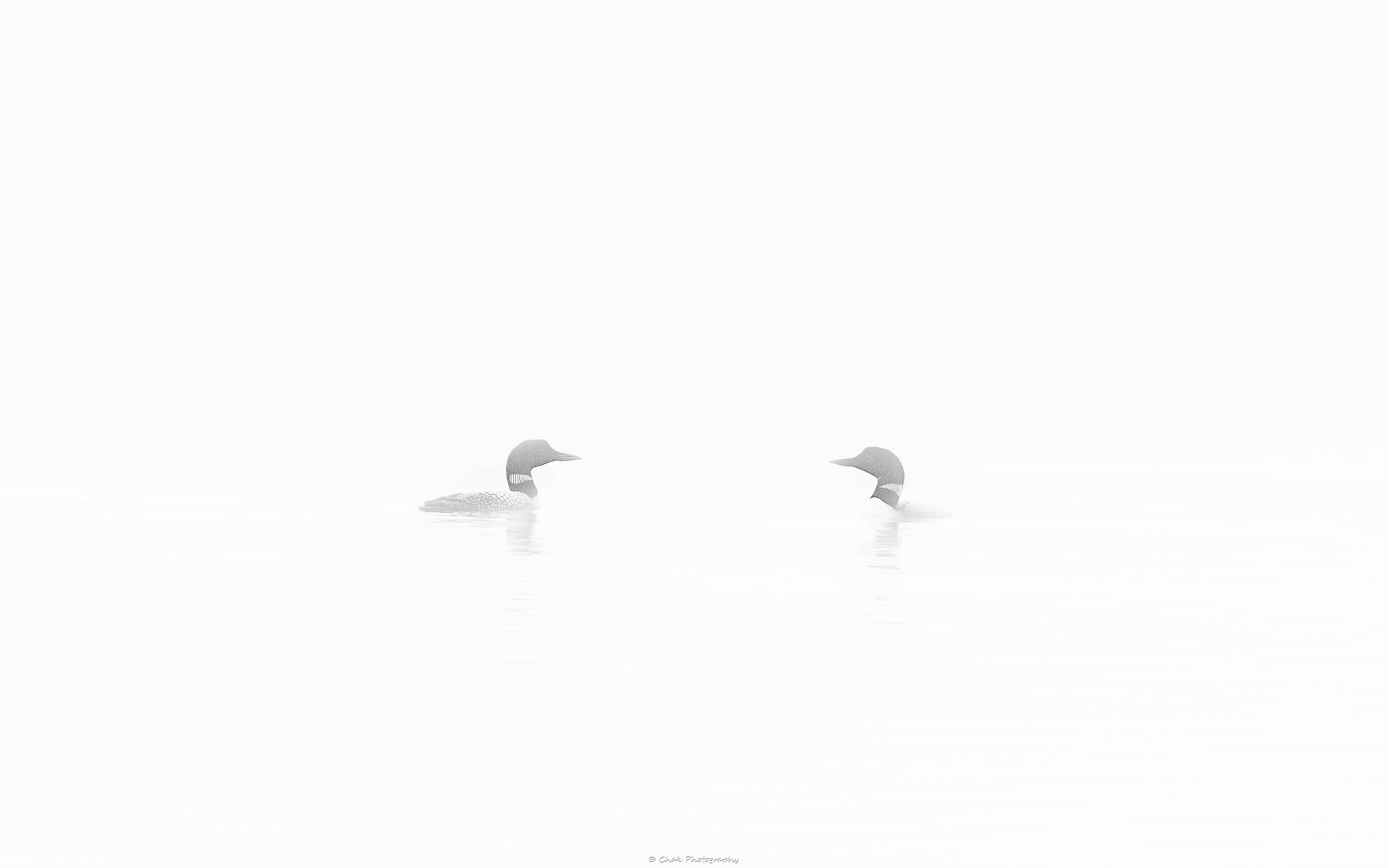
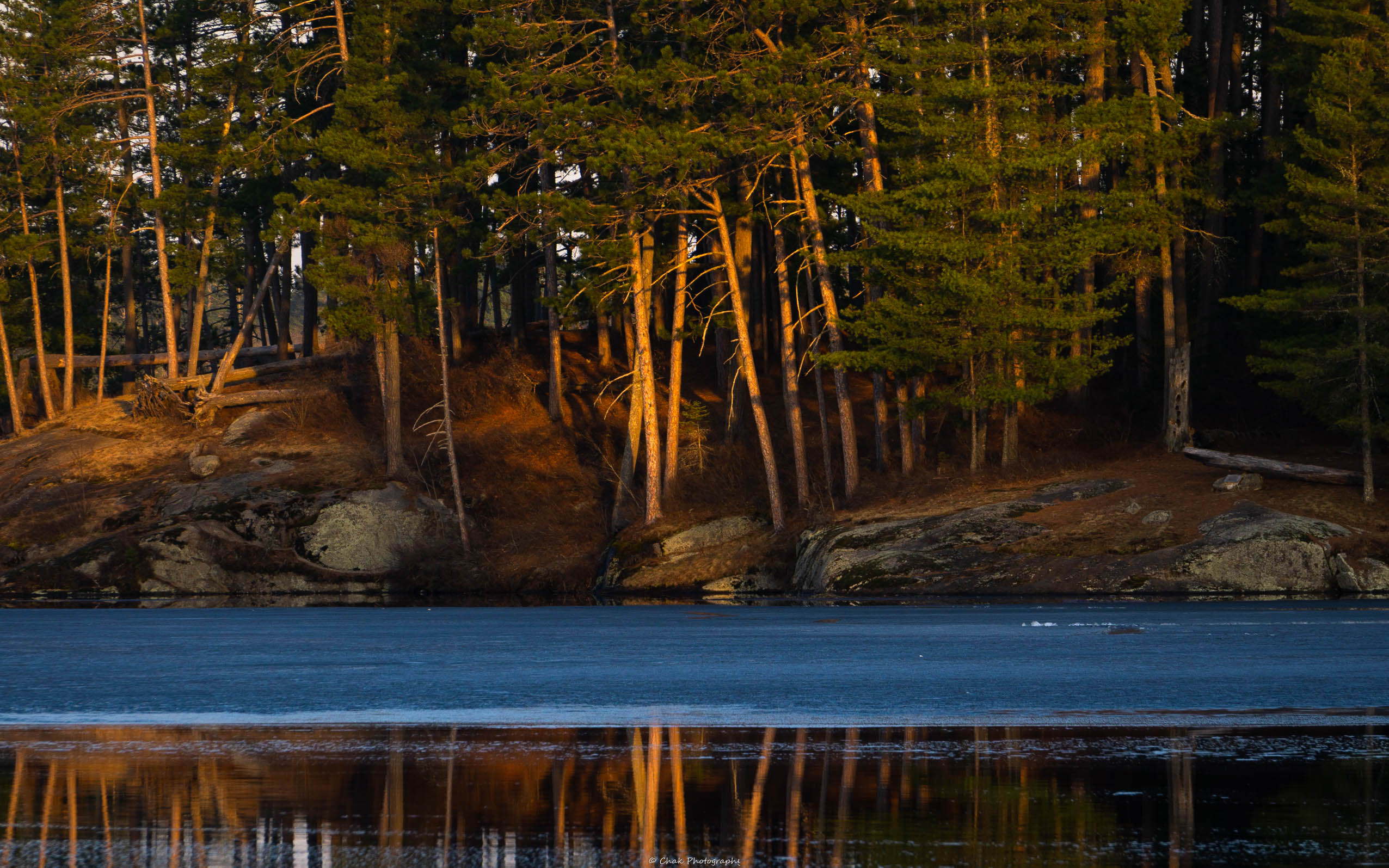
Poetic Visuals, Volume 2: Resonances

I am fortunate to have been included in the second issue of Poetic Visuals, a digital publication edited and curated by the wonderful Nick Becker (https://www.nbeckerphotography.com/) and Murray Livingston (https://www.murraylivingston.com/).

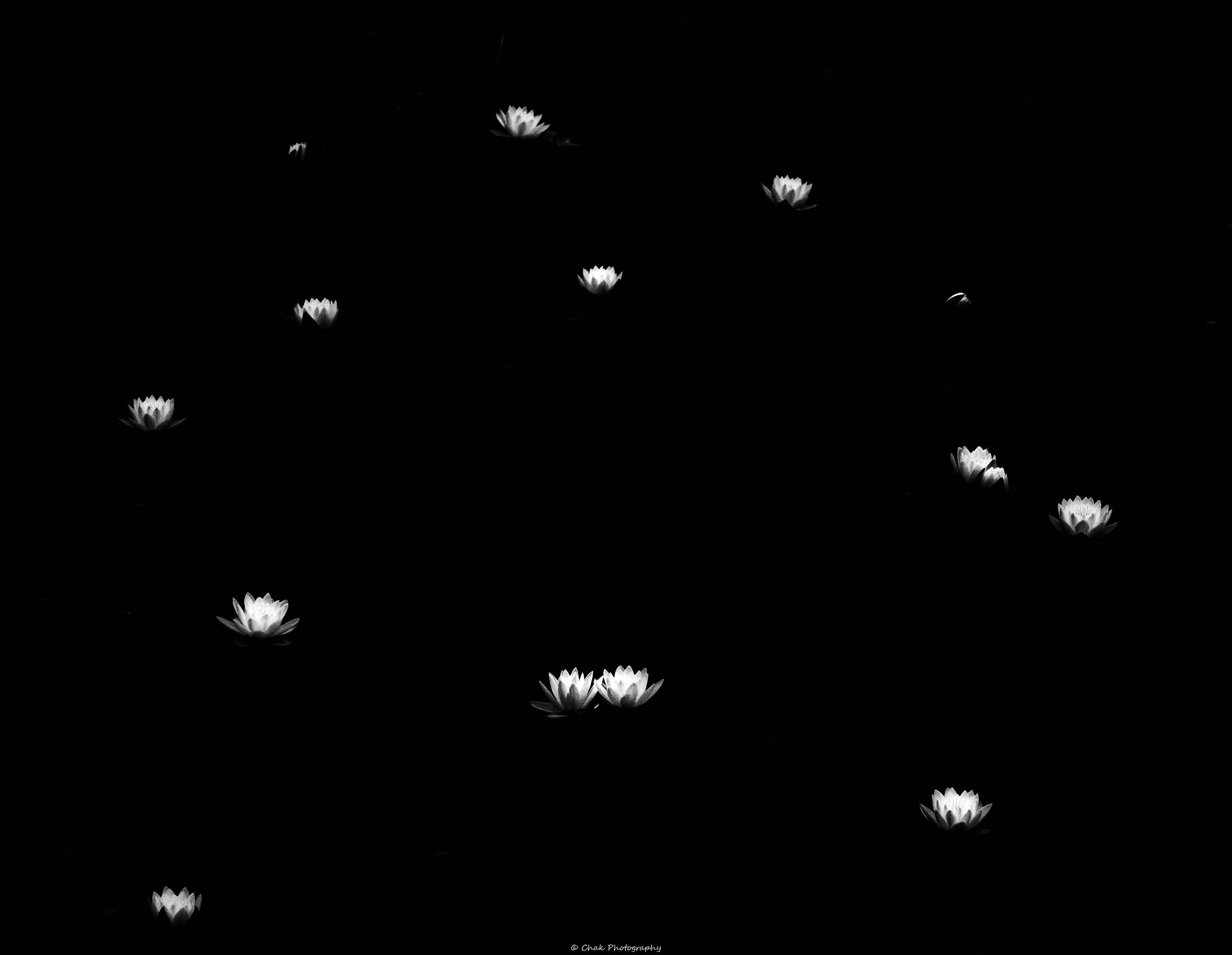
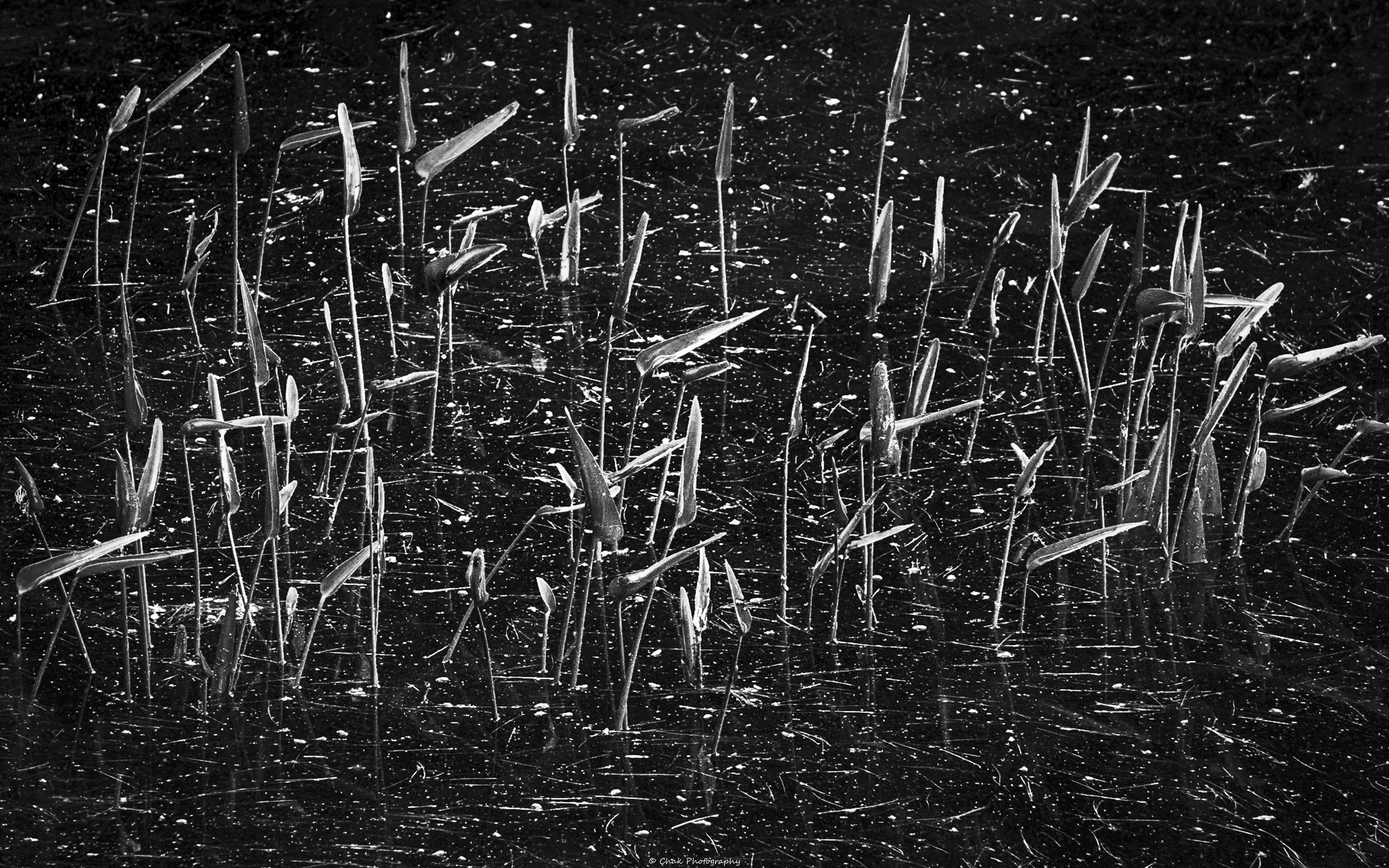
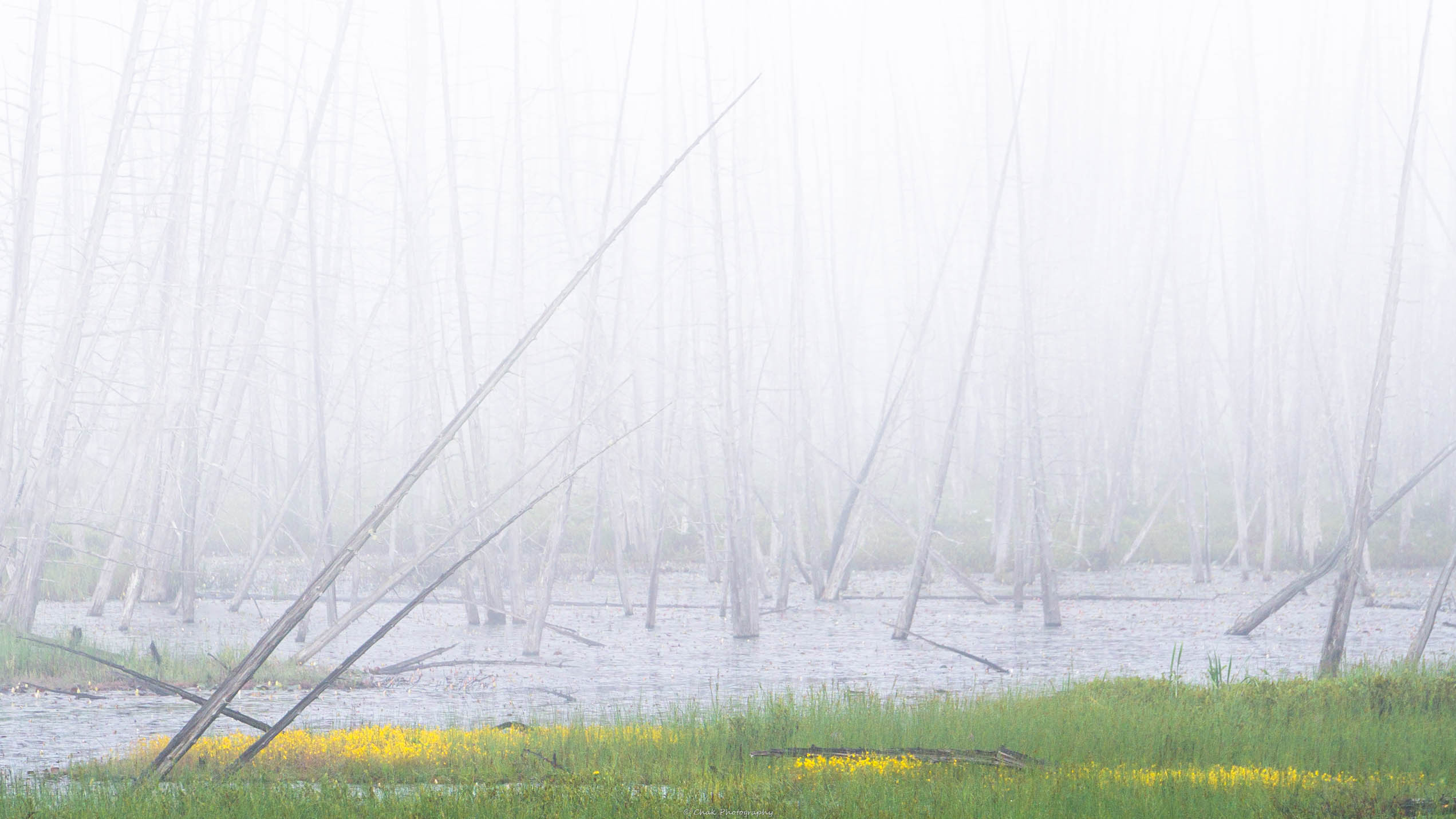
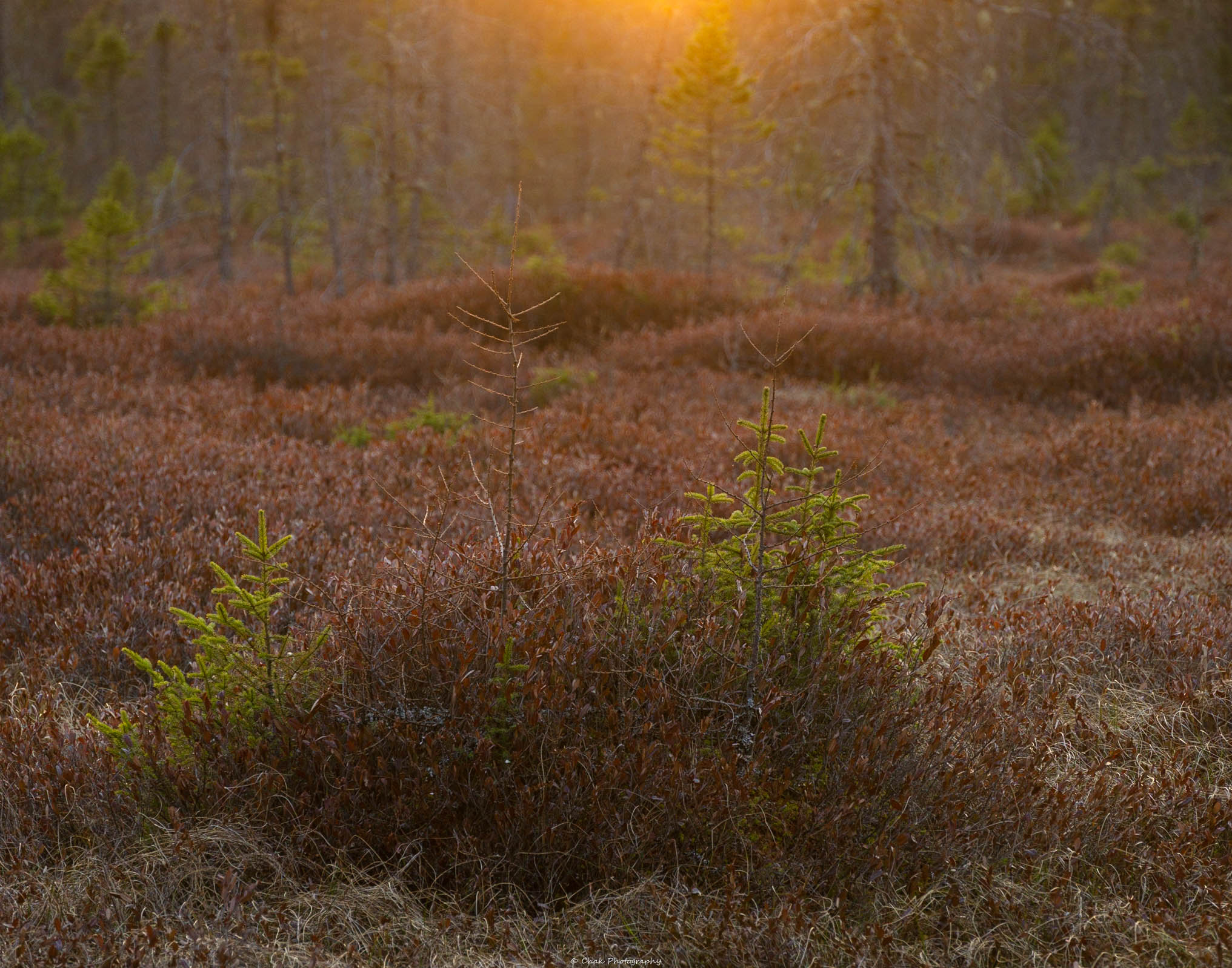
I have an essay titled “Inquiry in Wetlands” and a few images, primarily from the boreal wetland ecosystem in the Adirondacks. There are other wonderful essays in this volume from the editors as well as a collaborative gallery featuring images from all contributors.

The publication is free and available for download here:

Hope you enjoy reading this issue!

Utah Over The Years (Part II)

It has been more than a year since I published a collection of images from Utah (here is the link to earlier blogpost if you are interested: Utah Over The Years (Part I) | Musings from North country).

There are too many curations, much dissection about how and when to release portfolios for maximum impact. This is an attempt at neither of the above except that I have some time in my hands to process a few images, and relive the experiences I have had over the years in some special corners of this place. They were made across all seasons, some alone and in contemplation, and others while running around and having a good time with friends (mostly Prajit). The images are again ordered chronologically for the sake of simplicity.


They say we see what we see and not what is out there, and what we write (or photograph) is what we know and not what we saw. On the other hand, I read this morning that ‘eyesight is also insight’ (from Rudolf Arnheim while elaborating on how visual perception works). Consider these images as hobbling towards an insight that I think truly never arrives, until one has spent a significant time of their life with the subject.

the Green River soothes
A soothing moment on the Green River in an otherwise mentally miserable trip in summer of 2020.

first Fall
My first time experiencing Fall in Utah in 2020, where much awe got into the way of seeing things as they are.

between the idea and reality
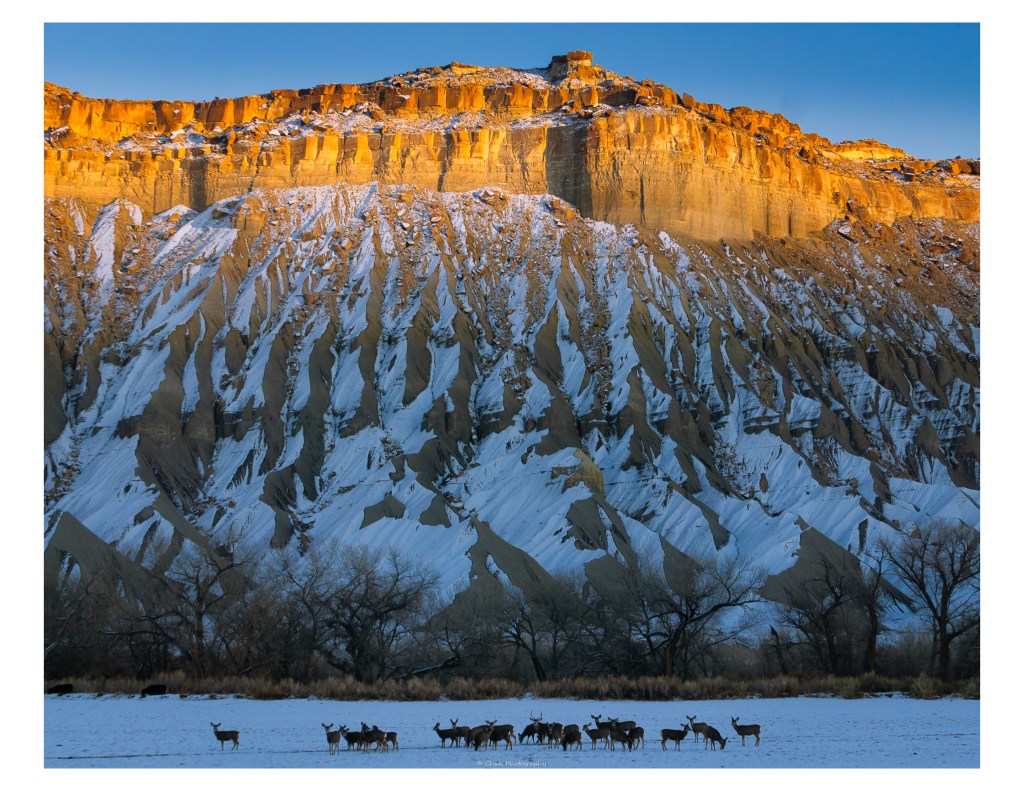
First sunset of the year 2021, when I was physically miserable in the frigid conditions but mentally satisfied, and beginning to nurture the idea of a new future. 

between the emotion and the response
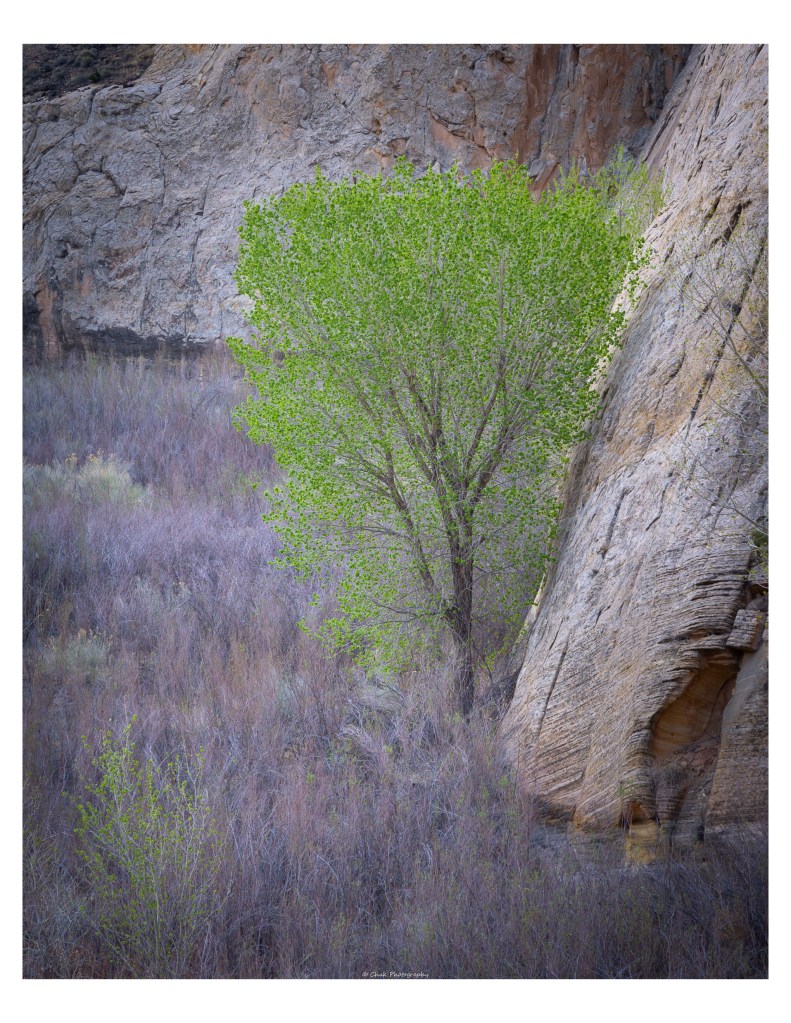
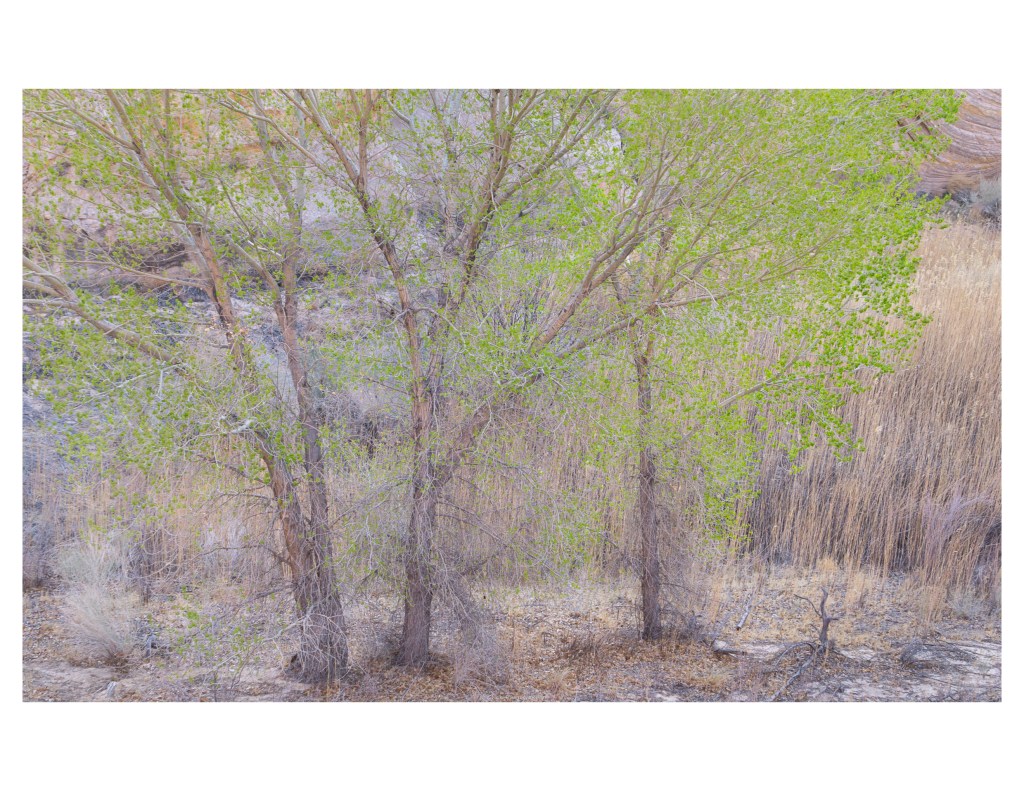
Spring of 2022, when I saw the fresh lime greens on cottonwoods for the first time. Since other aspects of life were somewhat conducive to well-being, I could be more present rather than being in a state of constant awe, and hence escape.

between the conception and creation

falls the shadow

it is still green

on both sides of the river
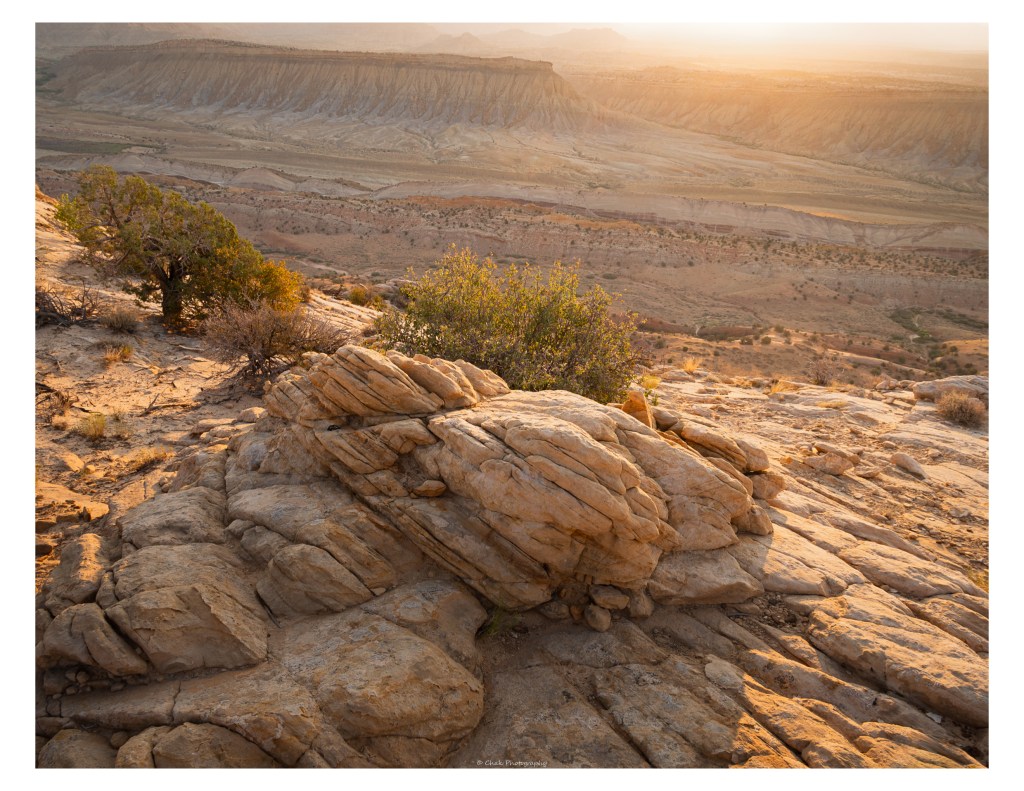
A new (to me) location in Utah in 2023 that is quite popular with photographers but afforded solitude because it was summer.

off the highway
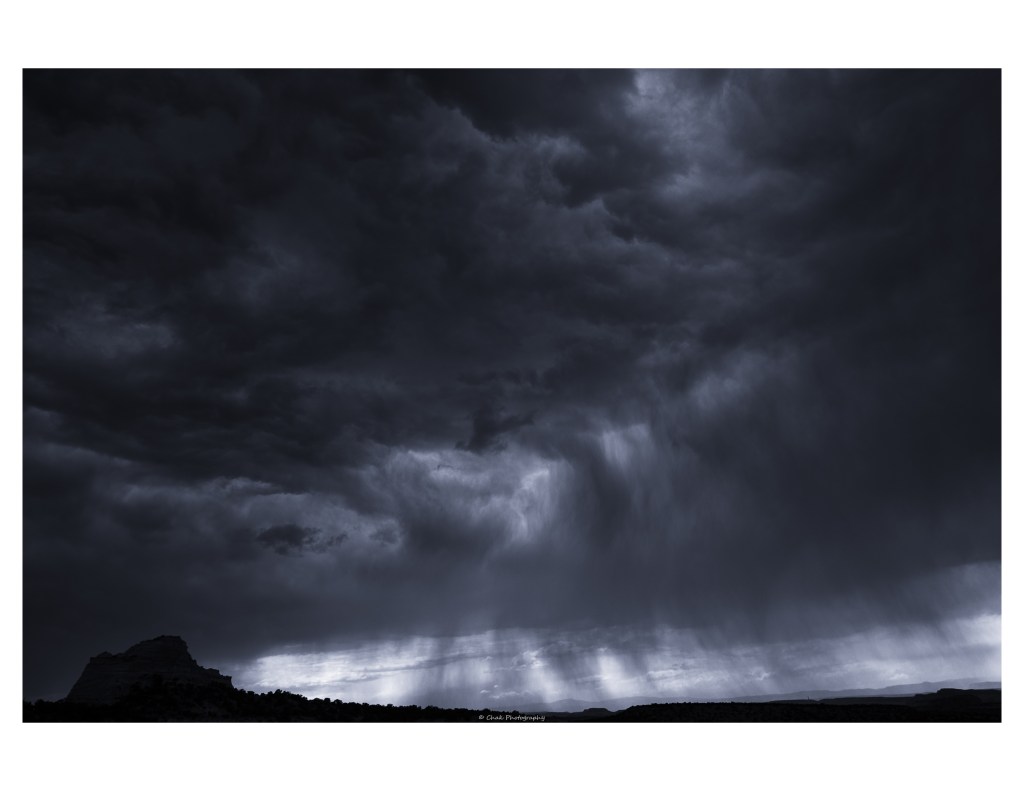
Witnessing the summer storm from the safety of the road and rental car; little did I know that the following summer I will be doing a night hike in the middle of one with Prajit.

second Fall
A fortunate turn of events led me to experience Fall in Utah again in 2023, this time with fog, rain, snow, and hail storms.

one of those days
that makes it worth the while (summer of 2024)

when you see it
Thanks to Prajit for drawing my attention to this scene, on our very hot and dry return hike from the overlook. Please check his version on his profile: Prajit Ravindran (@irockutah)  Instagram photos and Reels)

for the love of summer

taking refuge

the world is kin, but it is only on some days
when the cloud hangs low and thick, and any light
if at all, is diffused, that i am able to recognize it
where there were seventy three trilliums in June
now lies ninety five tamarack needles

all my life I have been warned of geography, do not step here, or mingle there
if it was indeed so dangerous, how could i live 
with snow, having been brought up with the sun
now history is another matter, yes that
would certainly kill, unless you strike first

if i have to constantly fight
over geography, and history is
bound to be our downfall
let us take respite from raping
each other’s stardust
and take refuge in arithmetic
when seventy three trilliums is being
replaced by ninety five tamarack needles, with more incoming
let us look directly at the stars, being plucked away in patient hurry

i have (not) seen yet

i have seen
the light bend
its path, making
the journey from me
to you to me
i have seen it
make it right

the first electron goes
to 1s orbital, the second
there as well, and
the next, to the next
orbit, savouring their
energy dance, they are
on our devices, if
there was a bell, the bell
would ring, the swiping thumbs
busier than our feet

the pines whistle, if they
spoke, we will
not listen, i know
of electrons moving
between orbitals, making light
for once i want
to see the light, not
what it does

The stories we tell


The stories we tell are often the stories others want to hear.
It does not matter whether it pertains to photography or politics or chemistry or community.

Oftentimes, these stories we tell and the ones we want to hear are in harmony. In that case, it is important to just tell the story.

Other times, the storytelling makes us think that we have always wanted to hear that story.  We may not delve into the merits of the story because of how well the story was told.

Then there are times when the stories we should tell are not what we want to hear. 
In these times, it is important that we tell the story as it is. 
It is also important that we must hear the story as it is.
Any suggestions for how the story must be told is akin to censorship.
And if you do not tell the story, you will eventually forget that you had stories to tell.
And if you decide to not hear the story, you will eventually forget who you are.

Lower St. Regis

Lower St. Regis.

I work by this lake. Not too long ago, I used to live within walking distance of the lake. 

Needless to say that it has been a source of profound joy to walk along the shoreline. By myself, often with my dog, and camera, sometimes with students and colleagues. 

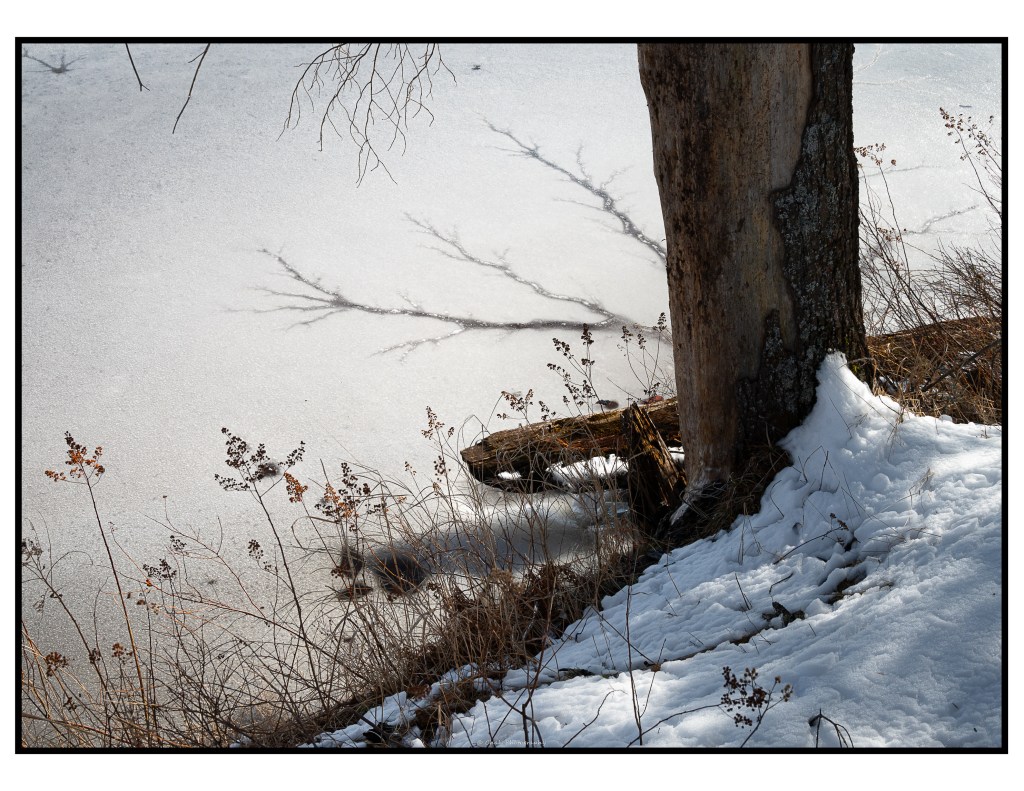
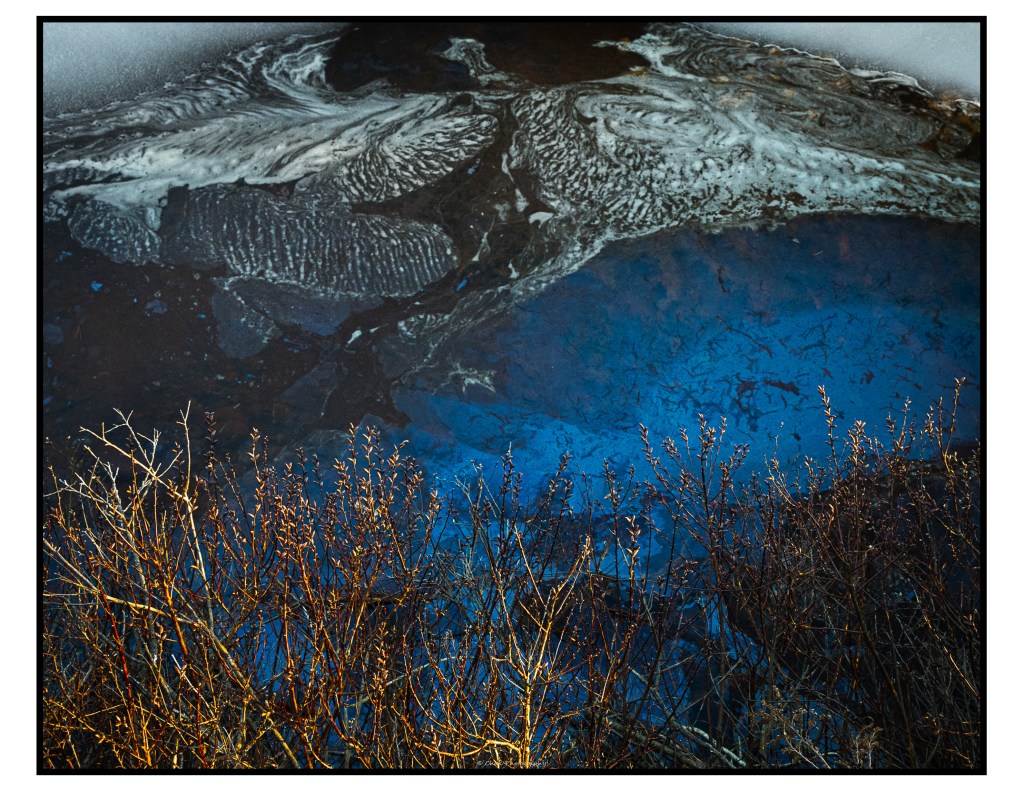
Here are some images made recently, during the Spring thaw. This time, more than any other period of the year, the lake is a dynamic, shape-shifting, animated being.

The end product is after all, just a product. But I hope it conveys the joy I felt in being at the shoreline. And if you are fortunate to have access to a water body, I hope you find the time to witness the periodic eccentricities of the seasons as well.

Breaking Up

Waiting

The Light That Breaks

Siblings For A Day

March of the Ice Stars

The Long Arm of the Sun

If There is Magic on the Planet…

Thoreau’s bookmark

Farewell to Winter

Tessellations in Time

If your Lordship should consider that these observations may disgust or scandalize the learned, I earnestly beg your Lordship to regard them as private and to publish or destroy them as your Lordship sees fit.” – Anton van Leeuwenhoek

van Leeuwenhoek was the first person to study microbial organisms from his local pond in great detail in the 17th century. He developed his own macro camera aka the compound microscope! He was the first person to witness the blood flow in capillaries. All chaste subjects! But his colleagues egged him on to venture beyond the prevailing ethics of the time. He finally came around to the idea and examined his own ejaculation.

Life is rife with speculations, but especially so during his time. Some theories suggested that tiny pre-formed humans were nestled inside the sperm cells. Even Leeuwenhoek himself was skeptical about the ‘blasphemous’ experiments. Hence, the above disclaimer while sending the results to the Royal Society. Remember Galileo. Remember Giordano Bruno. 

But Leeuwenhoek was fortunate to be in good company. The same cannot be said of sperm cells. They have to fulfill their destiny in a foreign environment. While they do not have a pre-formed life, they do possess the precursors that can bring life in conjunction with their counterparts. Millions perish, but they need to be successful only once.

Twelve thousand years ago, I might have hoped to go for a nice swim in Death Valley and make a hearty meal out of some crustaceans, not too unlike the organisms studied by Leeuwenhoek. If I were observant enough now, I could have come across the chemical remnants of the species that once called this place a home. An abundance of moisture, and a low-lying basin with no outlet made for a flourishing environment in a sub-tropical climate. But the tide changes with time. A host of geological factors that led to increasingly arid climate choked the pluvial lakes on their own minerals. Now, on a clear and warm evening,  I walk among the neat, geometrically energy-efficient alkali crust left behind from ages of desiccation. 

And on rare years, as thunderstorms bring rain to the valley, I see the tessellations disappear in a salty slush. I see before me a memory of what once was. 

The next morning, I hike up and away from the tessellated hexagons. With the elevation as my guide, the intricate patterns in the salt flat, the alluvial fans from the dried-up lake bed, the residuum of a plethora of species that was, the dirt and dust and mud in the this Land of Little Rain– all coalesced into a green oval spermatozoon.

A camouflage of biological life, waiting with the elements. For the tide to turn again. For the Tüpippüh to flourish once more.

(adapted from original writing in 2021)

Utah Over The Years (Part I)

If it was not for the Adirondack Mountains, I would have strived to make a living in Utah. Over the years, I have been fortunate to visit different parts of Utah. I am terribly lazy and scatter-brained when it comes to processing my photos; and now with multiple trips over the years, they are starting to pile up. This is an attempt to revisit the files in hard drives, recall some of my favourite memories, and process (in some cases re-process) the images. This is not an attempt to create a portfolio of the best images or categorize in any other way. 

I believe that in order to truly understand a place, one must live there. And if creation is an expressive testament to that understanding, then my images fall vastly short. Having acknowledged that, I feel that I have tried my best to understand Utah as much as an outsider can- by coming back to the same place, in different seasons, and in the same seasons in different years, reading and learning about the place, and contemplating the works of different artists from the region. All of the above have helped me make some images that I would like to share in a chronological order for the sake of simplicity.

The first one titled Fremont Gold is from 2018. Due to difficult personal scenarios, many parts of this trip were miserable but this late December afternoon, shivering by the river, was a welcome respite from the misery.

This one titled Step Into the Light is from 2020. This was my fifth trip to Utah but the first time during the Fall season. It was my first solo visit to Utah as well which meant there was no fixed itinerary or time table, thus making it the best kind.

This image, titled Dance With Me, is my personal favourite from this trip. The easy access from the roadside pullout brought me such joy every time I drove past this grouping of trees in the subsequent years. Alas, this year, I found that some of the trees have fallen.

From the same trip in 2020 came this image titled Canyon Possessed. I cannot say how far images go but touching canyon walls in person is a strong, strange feeling, and something I look forward to on every visit.

It took me another two years to witness the glory of cottonwoods in Spring. Here is one from my first Spring visit in 2022 titled 9 AM Light.

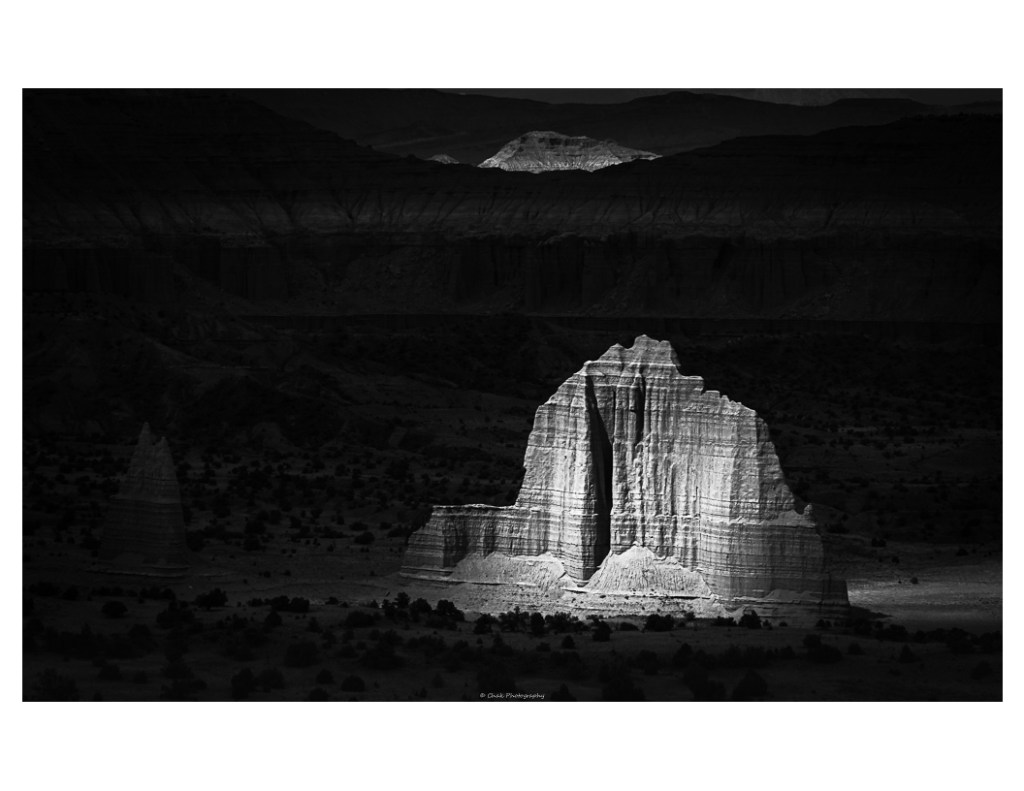
Though I have driven through Cathedral Valley thrice before, I camped up there for the first time in 2022 for three days. Here is one image titled Idle Afternoons.

The next few images are from this summer of 2023. Part of the trip was solo and part of it was in the company of good friends and passionate photographers- Eric Erlenbusch (@lausivee) and Prajit Ravindran (@irockutah). All the following images were made while exploring some new (to us) locations with Eric and Prajit. Though ‘three is a crowd’, it did not feel like that for once. Both of them are eccentric and serious in their own ways and helped me learn by observing their approach to making images.

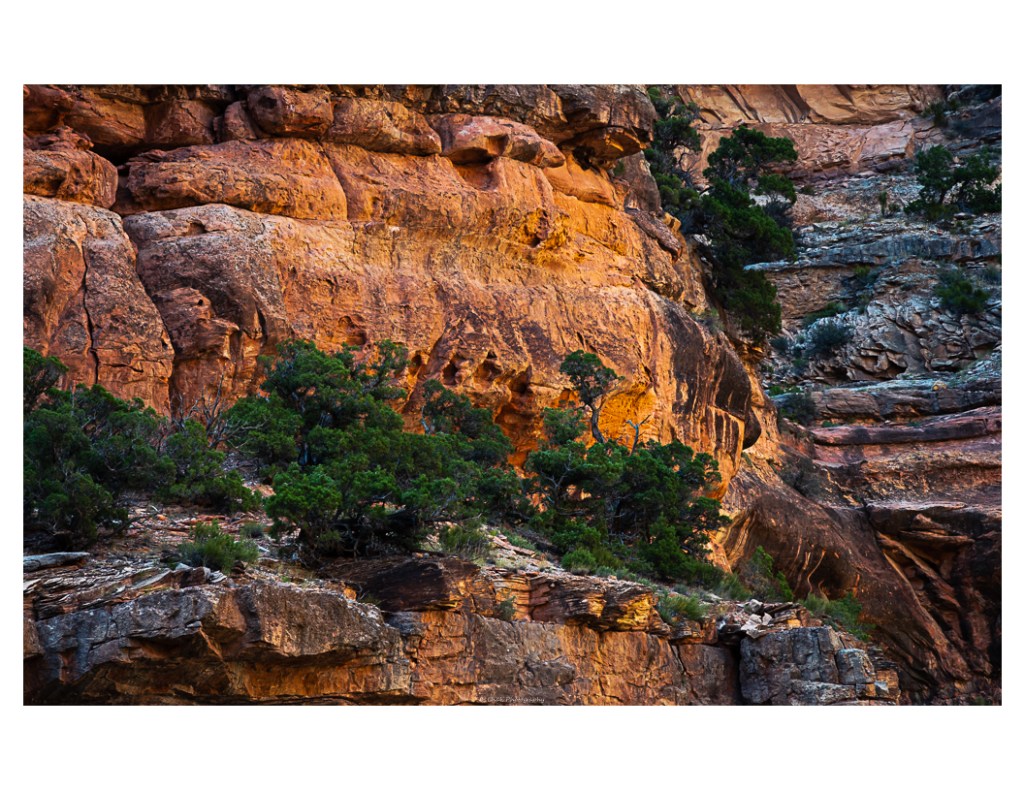
Afternoon Amble– one from our very slow, never tedious, walk in a canyon.

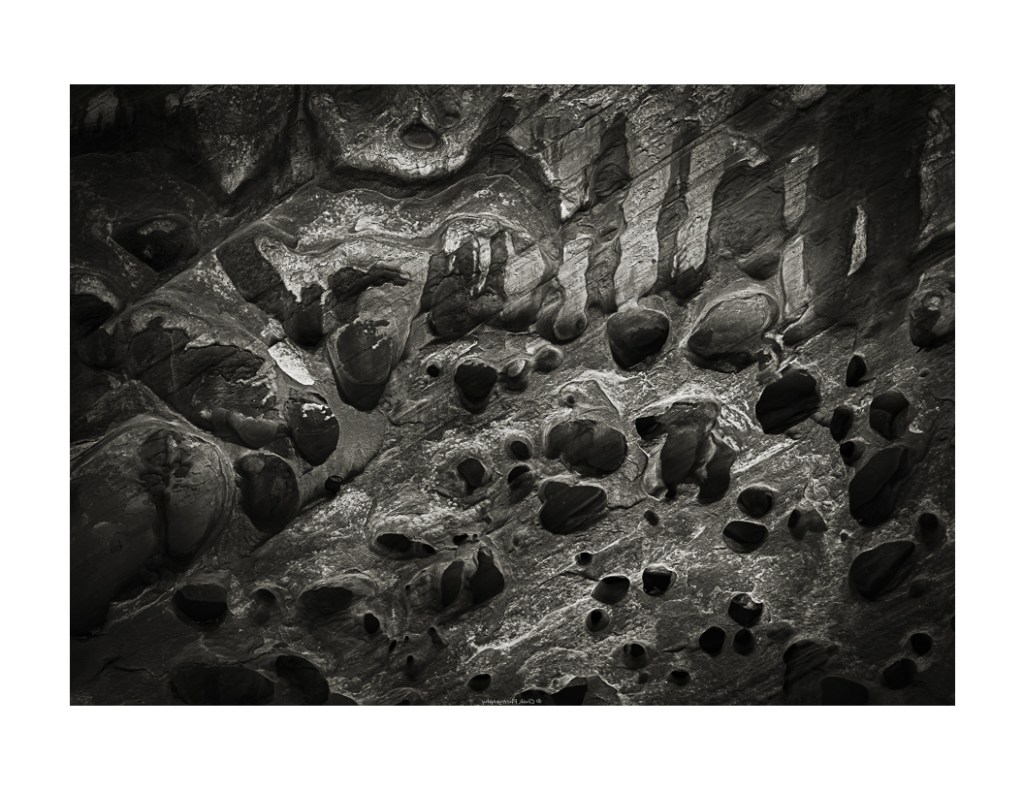
Varnish Drip– the varnish on this canyon almost resembles petroglyphs.

How Is This Possible?– this is what I was thinking (and possibly Eric too) as we came across this scene.

The Stars Below

The River Knows Its Way

The Light Fades

When the Clouds Move

To Be a Flower

Does It Ever Fade?

Bartering Hope for Meaning

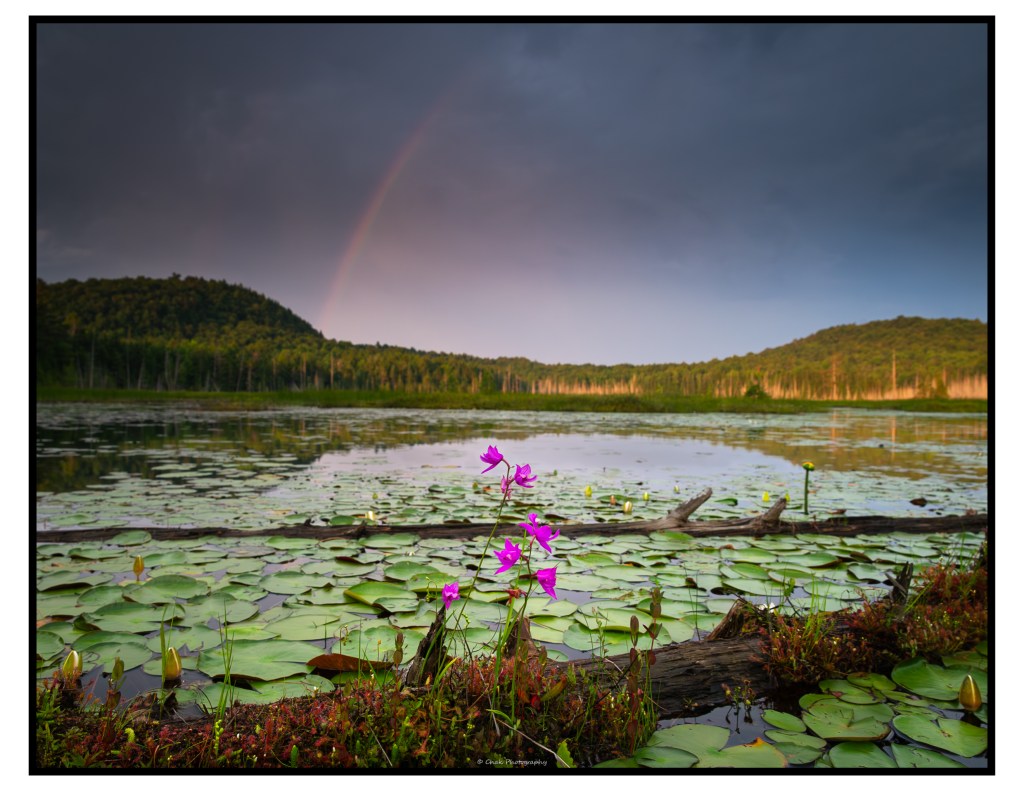
Between the world with all of its offers, and slow mornings on the peat, the choice was always easy. I take Moose, the dog, for a short walk around the nearby wetland before I set up the camera, if at all. Usually, he romps about off leash when I am making images, oftentimes making interesting patterns in water (that I can possibly include in my image), or getting me curious about that flower he is sniffing. Being early in a “non- descript” wetland has its advantages of having no other bipeds to worry about. But no off leash running for him until his leg heals. After his walk, I put the leash around my ankle while I set up my tripod. Bad idea for sure! And yet, in all these weeks, he has not brought the tripod, and me, crashing down. 

On my right, the pink sky is giving way to blood orange. Soon the mist will turn to vapours of gold. The tamaracks will briefly adorn this gold, pretending it is Fall, while the temperatures very well indicate mid summer. The labradorite landscape to the left starts to catch hints of these yellows, here and there, with no apparent rhyme or reason, guided by the whims of the sun playing truant with the fog. Not so long ago, there was just one lilypad, the first of the season, floating under the watchful eyes of bygone pines as water- bugs frolic. And now there is a whole family. 

Edward Abbey said-  “….in the desert, by the comparative sparsity of the flora and fauna: life not crowded upon life as in other places but scattered abroad in spareness and simplicity, with a generous gift of space for each herb and bush and tree, each stem of grass, so that the living organism stands out bold and brave and vivid against the lifeless sand and barren rock. The extreme clarity of the desert light is equaled by the extreme individuation of desert life-forms. Love flowers best in openness and freedom.”

Things are a little different here, in boreal country, with a holistic bounty of flora and fauna. With a generous gift of light and water for every lilypad and black spruce, each stem of the bladderworts, the living organism grows out of the sphagnum with dignity and grace. The extreme mist of the wetlands is equaled by the extreme fellowship of boreal life-forms. Love flowers best in love.

I hear the splash of a beaver. Of course, Moose has heard it. I grab the leash and start walking away before he makes a dash towards the beaver. A short distance away, there is a lady slipper, blushing with the mirth of the pre-dawn pinks. What are the odds of seeing a lady slipper in my life? A narrow range of soil and climate nourishes them; even when I made a journey of ten thousand miles to this place, it wasn’t until my ninth year of exploring that I first heard of this orchid. I could never have hoped or planned my life to meet a lady slipper. I had hoped for “bigger and better things” with my life, and for a good part of my life, planned and pursued them. But I am glad the smaller, meaningful things never went away. Sure enough, it did require a nudge every now and then from a book’s wisdom, a poet’s word, a hiker’s fatigue, and whatever the thing that whiskey does. Now that I have met this lady slipper, and that this is an important meeting, mere hope and planning do not suffice anymore.  

Wendell Berry wrote- 

“Let us see that, without hope, we still are well. Let hopelessness

shrink us to our proper size.

Without it we are half as large

as yesterday, and the world

is twice as large. My small

place grows immense as I walk

upon it without hope.”

This wetland too, grows immense as I walk upon it without hope. As night turns to day on this sphagnum, I stand in silence before the venous pitcher plant. I learn about the flowering leatherleaf, I quiver with the budding lady slippers, I rejoice with the geese, I spin with the water-bugs by the daunting lily pads. Between the shallow shoreline and the point where the water suddenly gives away to depth, amidst the swirling galaxy of shy pine cones and the bold pollens, the pickerel weeds quivering in the sunlight- a mass of yellow and green in the blue expanse, a dispatch from Spring, that I am reading on this warm summer morning. I come close to all that is holy, and unholy, as the light, ever so lightly, fills me from horizon to horizon. 

I cannot stay here all day because there are lectures to be prepared, and assignments to be graded. I slowly walk back with Moose: he is dragging his feet while wagging his tail.While I know my day will be long, I know that I have enough sustenance. In the graveyard of my erstwhile hopes and dreams, I have gathered my meaning. 

And this is what I have gathered this spring and summer- three trilliums, a swallowtail on a foam flower, one lady slipper (because you should not have too much of a good thing), a pitcher flower and three grass pink orchestrating a ballad of bladderworts and sundews, a million black flies so that I learn to value them all, three dragonflies to give me a brief respite from the black flies, a clump of rose pogonias around a budding tamarack, thirteen blooming water lilies, and two more at the cusp of a bloom (because you can never have too much of a good thing), seven bog candles, and a path lined with goldenrods.
Epilogue

On this Earth Day, unlike many others- individuals to organizations, I have no agenda. Instead I would like to speak about April. 

April is November in reverse. November withdraws, April approaches. While November is frightening, April can but merely be threatening.  It was in April, six years back, when I made my first solo trip to the Adirondack mountains. Coming to this place without any friends, not just for fun, not for group hiking with a checklist, but just being there- helped convince me of the importance of not having any agenda. If love was to be truly loved, it was meant to be in this land in April.  Now it has been two years, two Aprils, that I have been living on this land. And I wish to spend the rest of my Aprils in this land, bereft of agenda. And any good, which I always wish and strive for- for the land or anyone else, is merely a by-product of my actions.

* The following, follows from ‘Seeking November’ https://saikatchakra.wordpress.com/2023/01/15/seeking-november/

I waited for one infinity
-with my black dog4

Aji e probhat e rabir kar
       Kemone poshilo praner por
Kemone poshilo guhar aadhare probhat-pakhir gaan
Na jani keno re eto din pore jagiya uthilo pran6

We are in the month of April. The light is strong, but the season is wrong.

I was waiting for the revolution to come down in sleet, another month for the blood to thicken- in the thin of things. Before I could summon the hatred necessary to inflict the necessary, the ice was out. As if that was not enough, the speckled alder budded. The fever broke. Pus oozed out of the maples.

I was older in November. I am younger in April. 
I found ballads in all the places I came baying for blood.

We cannot know both the position and momentum of a subatomic particle with perfect accuracy.7

As I am being recklessly restored, a student comes and declares the bird they have met.

Wail wail wail tremolo yodel hoot wail wail
Not one she’s seen.
One bird she’s met.
One.

April is for greeting each one anew.

The first trillium
before the meadow takes over.
The first loon that serenades you
The last shard of ice that this lake offers to you.

And what must we do with this bounty?

This, you must learn, that April too has no value
For it was given to you,
And you must give it away.
The brown, passing through, makes space for the green.

References

  1. Bloom by Emily Dickinson
  2. The Waste Land by T.S. Eliot
  3. O Me! O Life! by Walt Whitman
  4. adapted from Mahabharata
  5. adapted from The White Man’s Burden by Rudyard Kipling
  6. Nirjhorer Swapnobhongo by Rabindranath Thakur
  7. Heisenberg’s Uncertainty Principle